A venture debt term sheet can look deceptively simple at first glance — an interest rate, a term length, an amount. But the details that actually determine whether a deal is favorable or restrictive tend to live in the language founders skim past. Here’s a plain-English breakdown of the terms that matter most, so you’re negotiating from an informed position rather than trusting that “standard terms” means “good terms.”
Interest-only period
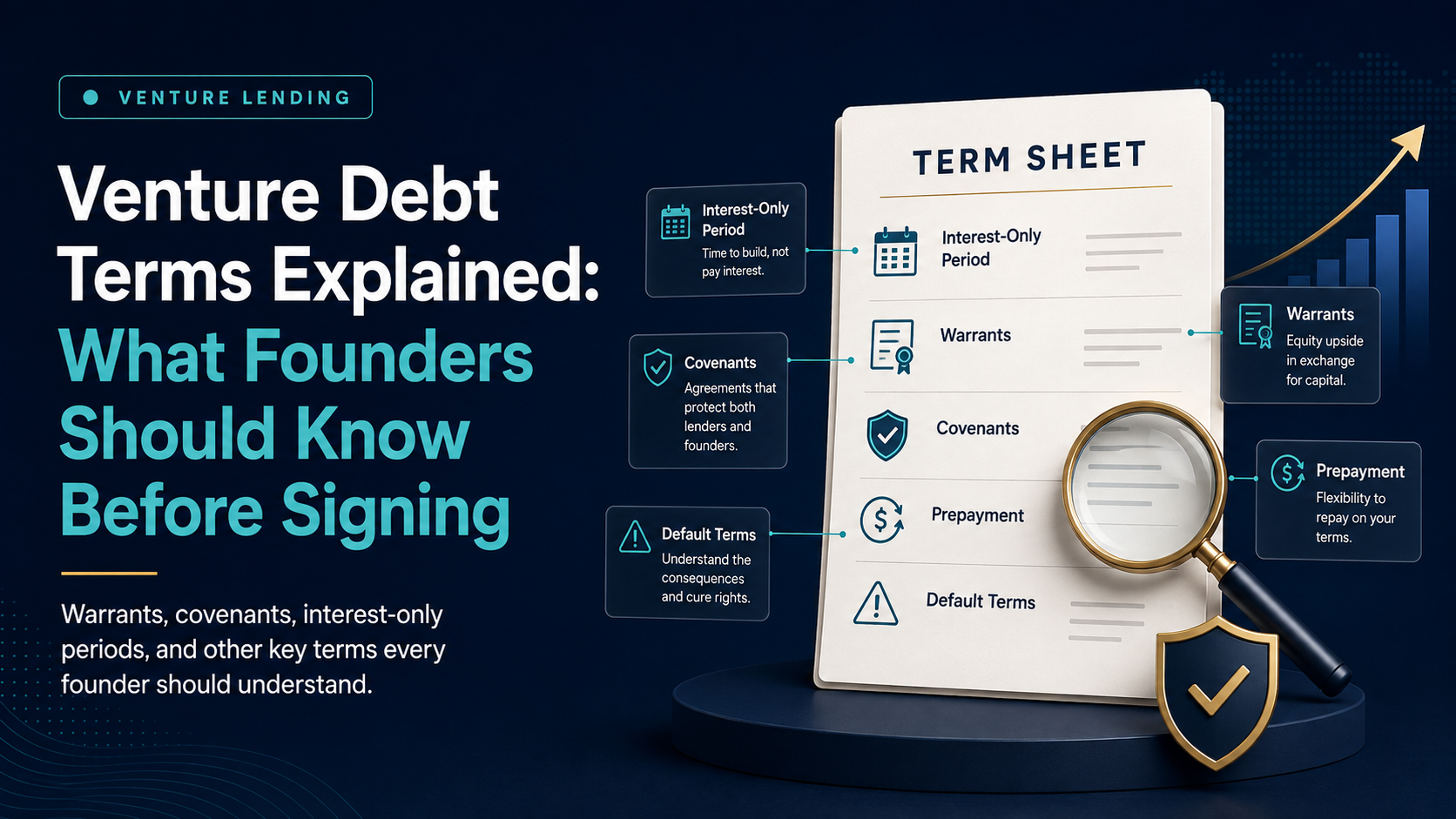
Most venture debt includes an interest-only period at the start of the term — a stretch of months where you’re only paying interest, not paying down principal. This matters enormously for cash flow, since it means the full weight of repayment doesn’t hit until later, giving the company room to deploy the capital toward growth before amortization begins. A longer interest-only period generally gives you more breathing room, but it’s worth understanding exactly when principal payments begin and what the payment looks like once they do — a sudden jump in monthly obligations can catch a company off guard if it’s not planned for well in advance.
Warrants
Warrants give the lender the right to purchase equity in your company at a set price at some point in the future — effectively a small equity kicker attached to the debt deal. Not all venture debt includes warrants, and warrant coverage (the size of the equity position the warrants represent) varies significantly by lender and deal size. Warrants are a real cost, even though they don’t show up as a cash payment — they represent future dilution, priced into the deal today. When comparing offers, it’s worth evaluating warrant coverage with the same seriousness as the interest rate, since a lower rate with generous warrant coverage might end up costing more in the long run than a slightly higher rate with no warrants at all.
Covenants
Covenants are conditions you agree to maintain throughout the loan term — common examples include minimum cash balances, minimum revenue thresholds, or restrictions on taking on additional debt without the lender’s consent. Covenants aren’t inherently bad; they’re a normal part of how lenders manage risk. But it’s essential to understand exactly what you’re agreeing to maintain, and what happens if a covenant is breached — some agreements include a cure period to fix the issue, others allow the lender to call the loan due immediately. A covenant that seems reasonable in a strong quarter can become a real problem in a slower one, so it’s worth stress-testing whether your business could comfortably maintain every covenant even in a below-plan scenario.
Prepayment terms
Some venture debt includes a prepayment penalty, discouraging early repayment even if your company later raises equity or generates enough cash to pay off the loan ahead of schedule. Understanding whether early repayment is allowed, and at what cost, matters if there’s any reasonable chance your company’s situation could change materially during the loan term — which, for a growth-stage company, is fairly likely.
Events of default and acceleration
This is the section founders are most likely to skip, and the one that matters most in a downside scenario. It defines what triggers a default — missed payments, covenant breaches, material adverse changes in the business — and what the lender can do in response, including potentially accelerating the full remaining balance. Understanding this section isn’t pessimism; it’s basic risk management, the same way you’d read the fine print on any contract that could materially affect your company’s future.
Board observer rights or information rights
Some venture debt agreements include a right for the lender to observe board meetings or receive regular financial reporting, short of full board membership. This is generally less restrictive than what an equity investor would require, but it’s still worth understanding exactly what reporting obligations you’re taking on, since they represent ongoing time and effort, not just a one-time signature.

Why comparing multiple term sheets matters more here than almost anywhere else
Venture debt terms vary widely between lenders in ways that a single headline interest rate doesn’t capture. A deal with a lower rate but tighter covenants, more warrant coverage, and a shorter interest-only period could be meaningfully worse for your company than a deal with a slightly higher rate but more founder-friendly terms across the board. This is exactly the kind of comparison that’s nearly impossible to make well with only one offer in hand — and exactly why working with a marketplace that surfaces multiple term sheets tends to produce a better outcome than negotiating with a single lender in isolation.
FAQ
Should I have a lawyer review a venture debt term sheet? Generally, yes — venture debt agreements are legally binding documents with real financial and operational consequences, and legal review is a standard, expected part of the process for any serious venture debt deal.
Are covenants negotiable? Often, yes, at least to some degree — covenants aren’t always fixed, and it’s reasonable to discuss whether a specific threshold reflects your business’s realistic operating range, particularly around seasonal or cyclical revenue patterns.
What’s a reasonable interest-only period? This varies significantly by lender, deal size, and company stage — there’s no single universal benchmark, which is another reason comparing multiple offers matters more than anchoring to a single number you’ve heard elsewhere.