Take a walk through your warehouse or production floor, and you’re looking at money — just not money you can spend. Inventory sitting on shelves, machinery that’s paid off and fully owned, equipment that’s essential to your operations but generating no direct cash flow of its own. Asset-based lending is the mechanism for converting that trapped value into capital you can actually deploy.
Start by actually quantifying what you have
Most business owners have a rough sense that their inventory and equipment are “worth something,” but few have a precise, current number. Before pursuing asset-based lending, it’s worth doing a real accounting:
- Inventory: What’s the current market value of finished goods ready to sell? Raw materials and work-in-progress, separately?
- Equipment: What would your major equipment realistically sell for today — not what you paid for it originally, but current market value accounting for depreciation and condition?
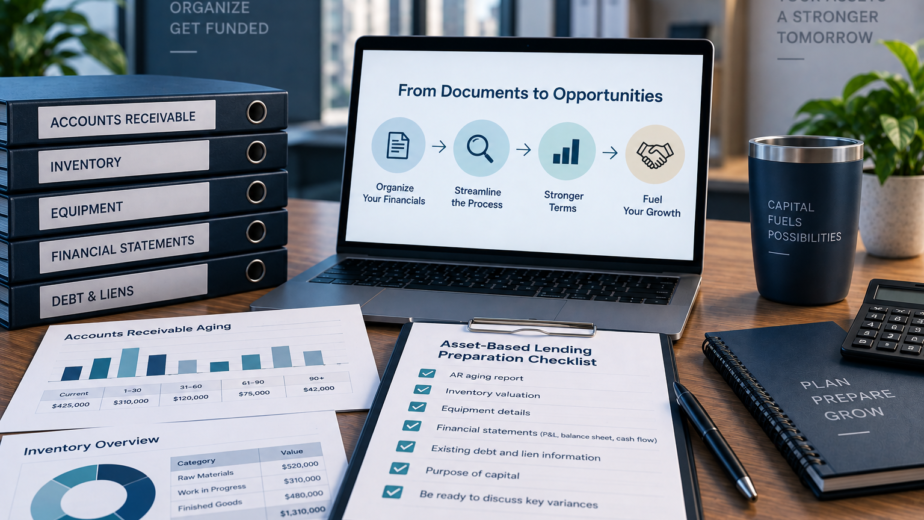
- Receivables: What’s your current accounts receivable balance, broken down by how current or past-due each invoice is?
This isn’t just useful for a lender conversation — it gives you a genuinely clearer picture of your business’s actual liquidity position, which is valuable information independent of whether you pursue financing at all.

How the value gets converted into usable capital
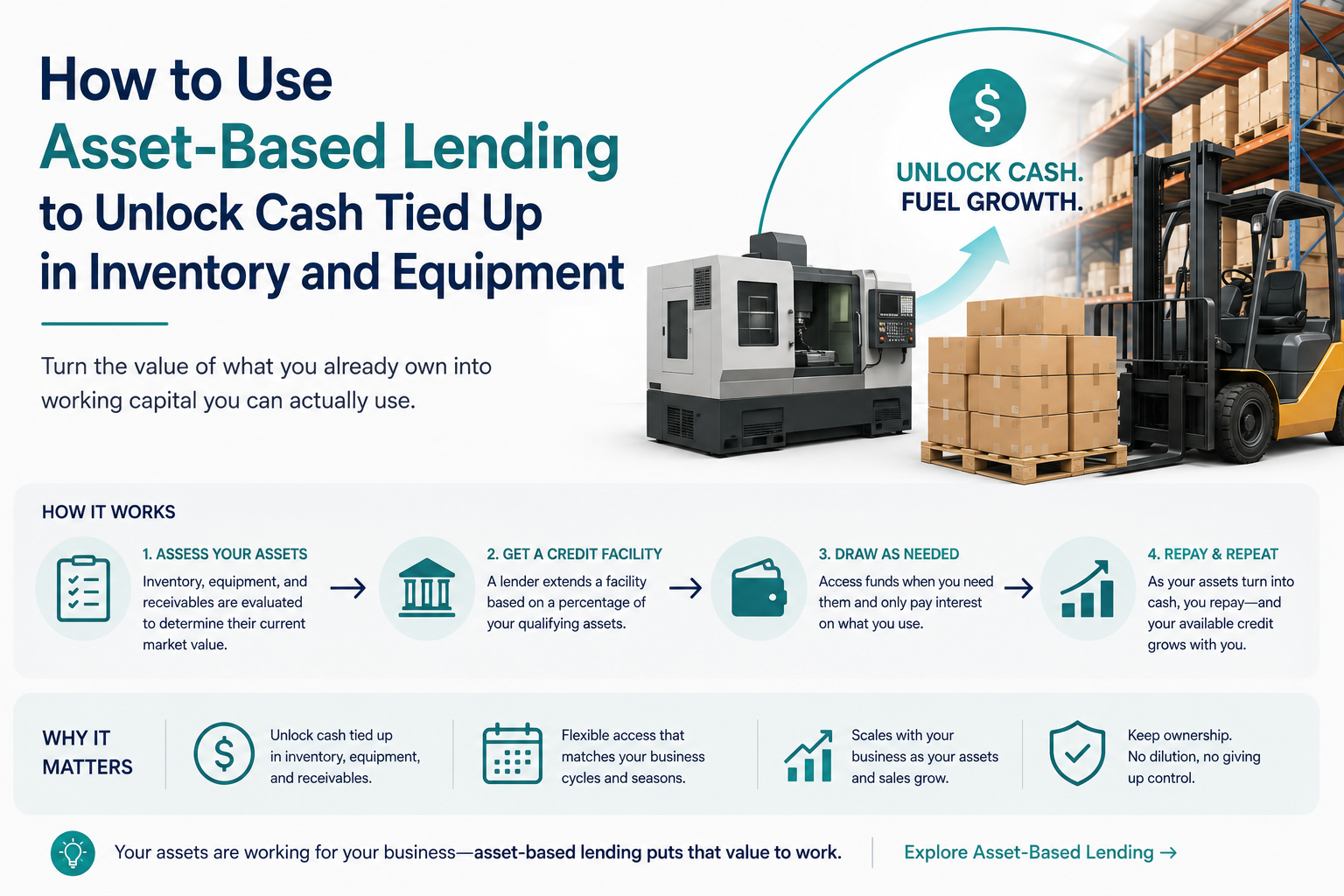
Once a lender assesses your qualifying assets, they extend a credit facility sized against that value — typically a percentage of each asset type, reflecting how easily that asset could be converted to cash if needed. You draw against that facility as needed, rather than receiving the full amount as a lump sum you have to immediately start repaying regardless of whether you need it yet.
This “draw as needed” structure matters practically: if you’re using the facility to smooth out a seasonal inventory buildup, you might draw heavily in the months leading into your busy season and repay as sales convert that inventory into revenue — rather than carrying a large, static loan balance year-round.
A realistic scenario: seasonal inventory buildup
Consider a business that needs to significantly increase inventory ahead of its peak season — say, building up stock three months before the busiest quarter of the year. Cash is tightest in exactly this window, since money is going out to suppliers well before the corresponding sales revenue comes in. An asset-based facility, sized against the growing inventory value itself, can fund that buildup without draining the operating cash needed to cover payroll and other fixed costs during the same period. As the season plays out and inventory converts to sales, the facility gets repaid — and the available credit resets, ready for the same cycle next year.
A realistic scenario: equipment that’s already paid off
A manufacturer with fully-owned, unencumbered equipment is sitting on real collateral value that a bank loan sized on cash flow alone might not fully capture. An asset-based facility can recognize that equipment’s value directly, unlocking capital for a new opportunity — a large order, an expansion, a strategic hire — without requiring the business to take on new equipment debt or sell the equipment itself.
What changes as your asset base grows
One of the more overlooked advantages of asset-based lending is that it’s not static. As your receivables grow with increased sales, or your inventory expands to support a larger operation, the borrowing base can grow with it — assuming the facility is structured to reassess periodically. This is meaningfully different from a fixed term loan, which doesn’t adjust upward as your business scales, potentially leaving you underfunded relative to your actual growth within a year or two of taking out the original loan.
Getting started
The practical first step is getting a real assessment of your specific assets from a lender — not a generic estimate, but an actual evaluation of your receivables aging, your inventory composition, and your equipment’s current value. That assessment tells you, concretely, how much borrowing capacity your business already has sitting on its balance sheet.
FAQ
Do I lose the ability to sell my inventory once it’s used as collateral? No — you continue operating your business normally, selling inventory and collecting receivables in the ordinary course of business. The facility is structured around your asset base changing over time, not freezing your operations.
How often is my borrowing base reassessed? This varies by lender and facility structure — some reassess monthly, others less frequently. It’s worth understanding this cadence upfront, since it affects how quickly your available credit adjusts as your asset base changes.
Can I use asset-based lending for a one-time need, or is it meant to be ongoing? Both are common. Some businesses use it for a specific, time-limited need like a seasonal buildup; others maintain an ongoing facility as a standard part of their working capital strategy.