Sourcing product internationally for the first time changes the financial shape of an order in ways that aren’t always obvious until you’re in the middle of it. Longer lead times, upfront deposits, freight and customs costs, and a supplier relationship without the payment flexibility a domestic vendor might extend all combine to make the cash flow gap between winning an order and getting paid for it wider than most first-time importers expect. PO financing can bridge that gap — but it’s worth understanding a few import-specific details before you apply.
Why importing changes the financing picture
Domestic PO financing often deals with relatively predictable, shorter timelines. International orders introduce additional variables: production time overseas, ocean or air freight transit, customs clearance, and the possibility of delays at any of those stages. A lender evaluating PO financing for an imported order needs to account for this longer, less predictable timeline — which can affect both the structure of the financing and how far in advance you need to start the process.
What lenders typically want to see for an import-based PO financing request
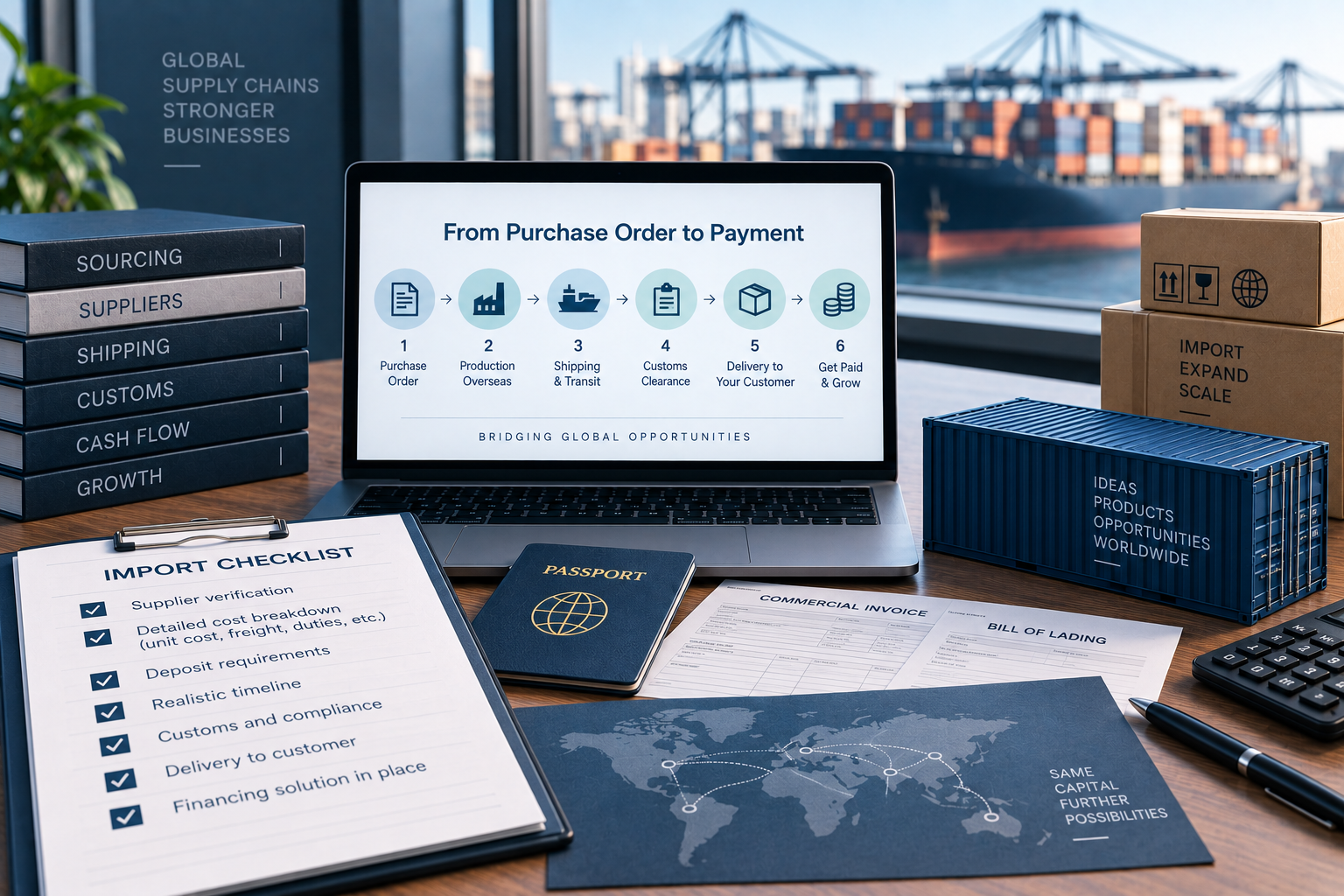
A clear, itemized cost breakdown that includes not just the unit cost of goods, but freight, customs duties, and any other landed costs — since these all factor into the true cost of fulfilling the order, not just the supplier’s invoice price.
Documentation of your supplier relationship, particularly for a first-time import — how established is the supplier, do you have a track record with them, and what terms have they offered on deposits or payment timing.
A realistic total timeline, from placing the order through production, shipping, customs clearance, and final delivery to your customer — first-time importers often underestimate this timeline, which can create a mismatch between the financing term and the actual time needed to complete the transaction.
The deposit problem specific to first-time importers
Many overseas suppliers require a deposit — sometimes 30% or more — before beginning production, with the remaining balance due before or upon shipment. For a first-time importer without an established relationship, this deposit requirement can be less flexible than it might become after a track record is established. Understanding this upfront cost structure, and confirming whether your PO financing can cover deposit payments specifically or only the full balance, is worth clarifying early in the process.
Building in a realistic buffer for delays
International shipping timelines, even with a reliable freight forwarder, are less predictable than domestic ones — customs delays, port congestion, or production timeline slippage at the supplier’s factory are all common enough that a first-time importer should build meaningful buffer into their expected timeline, rather than planning against the best-case shipping estimate.
What happens if your customer’s delivery expectations don’t match your import timeline
If you’ve committed to a delivery date with your own customer, it’s worth confirming that commitment against a realistic — not optimistic — import timeline before finalizing the order. A PO financing structure can fund the transaction, but it can’t compress a shipping timeline that’s inherently longer than domestic sourcing. Managing your customer’s expectations against the real timeline is a separate, equally important part of taking on an international order for the first time.
Building a track record for future imports
Your first imported order, financed and completed successfully, becomes a track record that strengthens future applications — both with your supplier, who may offer better terms on subsequent orders, and with lenders, who have real transaction history to evaluate rather than a first-time request. Treating the first import as a foundation for a repeatable process, rather than a one-off transaction, pays off in smoother, faster financing on subsequent orders.
FAQ
Can PO financing cover the deposit my overseas supplier requires before production? This depends on the specific lender and structure — worth confirming directly, since not every PO financing arrangement is structured to cover deposits versus only the balance due before shipment.
How much earlier should I start the financing process for an imported order compared to a domestic one? Given the longer, less predictable timeline involved in international shipping, starting well before you would for an equivalent domestic order is generally the safer approach — the specific buffer depends on your supplier’s location and typical shipping method.
Does having no prior import experience disqualify me from PO financing? Not necessarily, but it does mean a lender will look closely at the specifics of your supplier relationship and order documentation, since there’s no track record yet to lean on.