Most businesses track late payments as an inconvenience — a line in accounts receivable that’s overdue, a slightly awkward follow-up email. Few actually calculate what a slow-paying customer costs them in real terms. Once you do the math, the picture often looks very different from “mildly annoying,” and it changes how urgently the problem deserves to be addressed.
The cost that’s easy to see
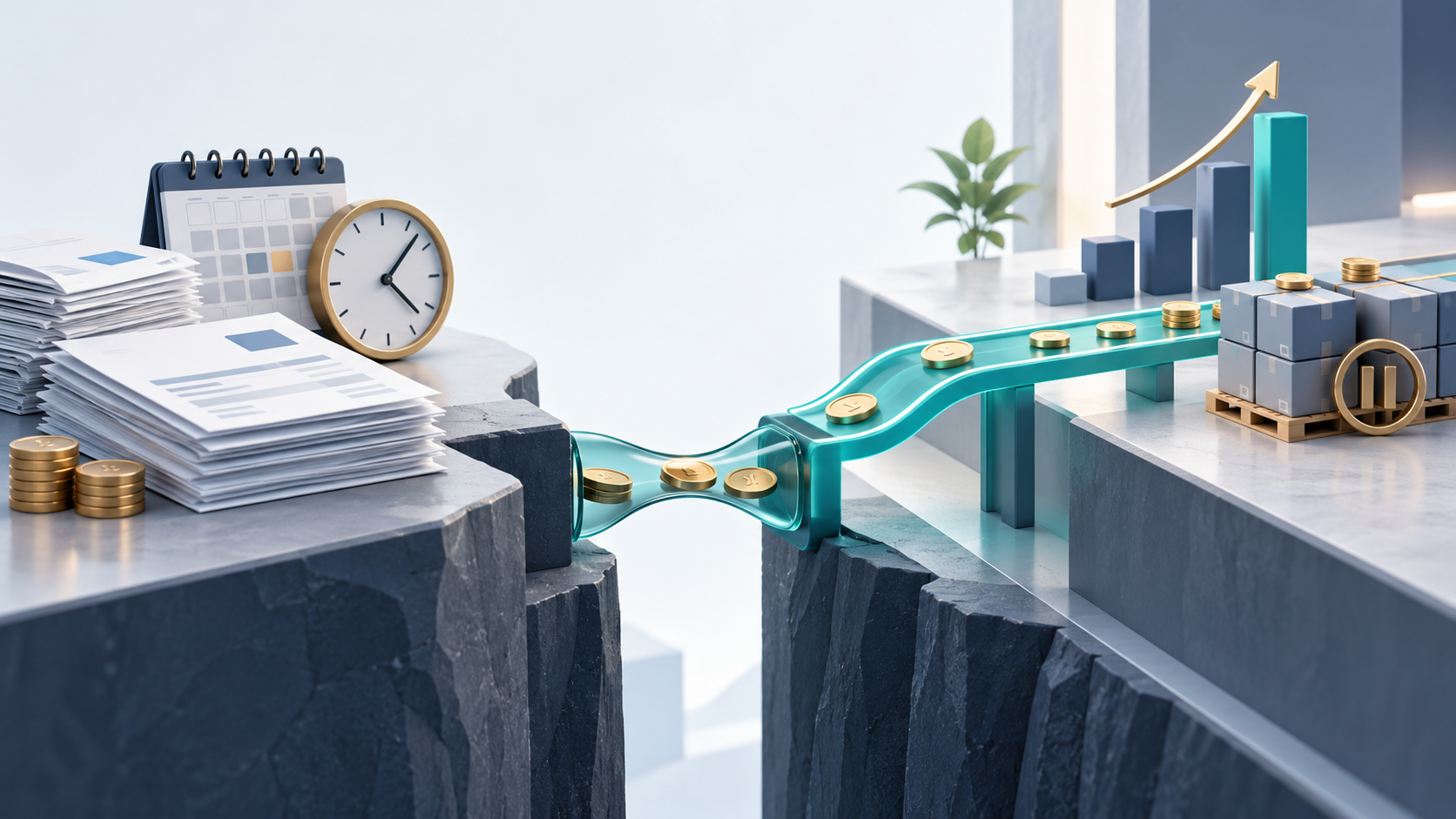
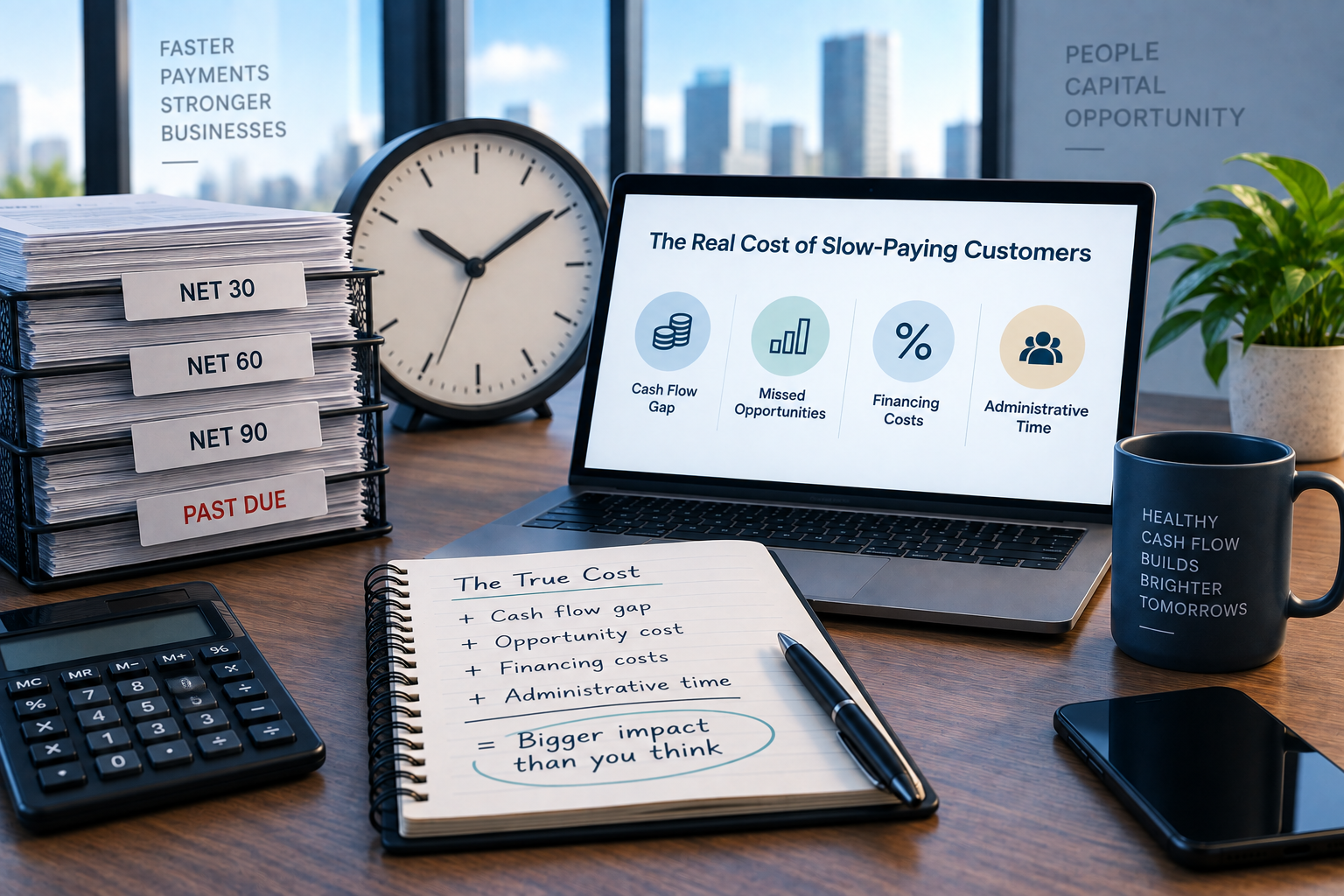
The most obvious cost of a slow-paying customer is the direct cash flow gap: money you’ve earned but don’t yet have, which means you’re covering payroll, supplier payments, and operating expenses out of other cash reserves or financing in the meantime. This is the cost most businesses do account for, at least loosely.
The costs that are easy to miss
Opportunity cost. Cash tied up waiting on a slow-paying customer is cash that isn’t available for inventory purchases, a new hire, marketing spend, or any other growth initiative that might have generated a better return if it had been available sooner. This cost is real but invisible, since it never shows up as a line item — it just shows up as opportunities not taken.
The cost of financing the gap. If you’re using a line of credit, factoring, or any other form of financing to cover the cash flow gap created by slow-paying customers, that financing has a real cost — one that’s directly caused by the customer’s payment timeline, even though it never appears on their invoice or in their assessment of the relationship.
Administrative cost. Chasing overdue payments consumes real time — sending reminders, making calls, managing the awkwardness of the conversation — time that isn’t productive for anything else the business could be doing.
Compounding risk over your customer base. A single slow-paying customer is manageable. A customer base where slow payment is the norm rather than the exception means these costs aren’t isolated — they’re a structural drag on the business, compounding across every invoice outstanding at any given time.
A simple way to calculate your real exposure
Take your average accounts receivable balance and estimate how many days, on average, it takes to collect versus your stated payment terms. The gap between those two numbers, multiplied by your daily revenue and by whatever rate you’d otherwise pay to access that cash (whether through financing or opportunity cost), gives you a rough, honest estimate of what slow payment is actually costing your business — not just delaying it.
What to do about it: three approaches, used together
Tighten terms where you have leverage. Not every customer relationship allows for renegotiating payment terms, but some do — worth a direct look at which accounts have room to move, covered in more detail in a related post on negotiating payment terms.
Improve your own collection process. Clear invoicing, proactive follow-up before a payment is even due, and consistent enforcement of your stated terms all reduce the gap between when payment is due and when it actually arrives — often more than businesses expect from what feels like a small operational change.
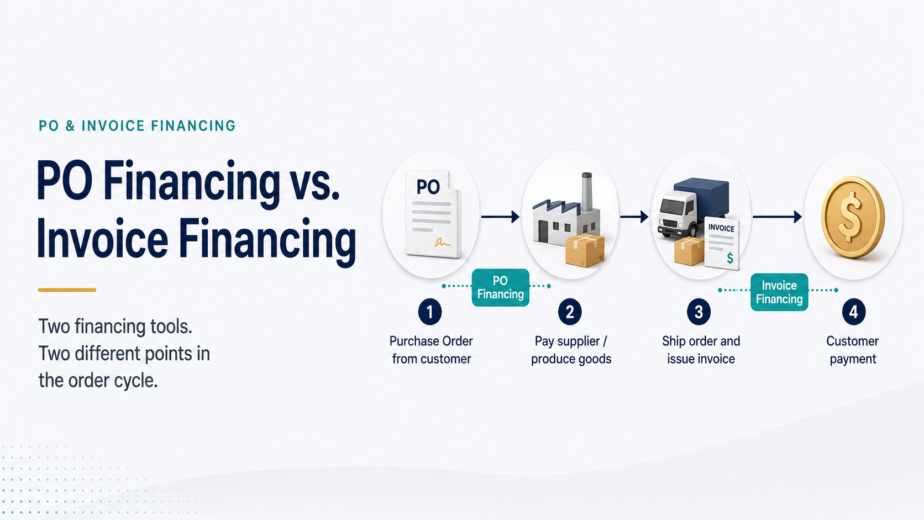
Use invoice financing for the gap that remains. For accounts where terms genuinely won’t shorten, invoice financing directly addresses the cash flow cost without requiring the customer relationship to change — converting the invoice into usable cash well before the customer’s actual payment date, rather than absorbing the full cost of the gap yourself.
Why measuring this matters even if you don’t change anything yet
Even if you’re not ready to act on it immediately, calculating the real cost of slow-paying customers changes how you think about the problem — from “a bit annoying” to “a specific, measurable drag on the business” — which tends to make the case for addressing it, whether through better collections, financing, or renegotiated terms, much clearer than it was before you did the math.
FAQ
Is it worth calculating this cost separately for each major customer? Yes, particularly for your largest accounts — since a slow-paying large customer can represent a meaningfully bigger cost than several smaller ones combined, even if their individual invoices look manageable.
Does invoice financing eliminate the cost of slow payment, or just shift it? It converts an unpredictable, opportunity-cost-heavy problem into a known, calculable financing cost — which for many businesses is a better trade than absorbing the full, harder-to-measure cost of the cash flow gap themselves.
How do I know if my collection process itself is part of the problem? Compare your actual average collection time against your stated payment terms — a significant, consistent gap between the two often points to a collections process issue rather than purely a customer behavior issue.