A lender generally cares as much about the direction of your revenue as its current level. A business with steadily growing revenue, even at a modest current scale, often presents a more favorable picture than one with higher but declining or stagnant revenue. If your credit history doesn’t reflect your business’s current trajectory — for example, if a past rough patch is weighing on your score while your recent performance has been strong — a clear, honest explanation of that trend can meaningfully shift how an application is evaluated.
Cash flow consistency
Beyond the total revenue number, lenders often look at how consistent and predictable your cash flow actually is. A business with steady, predictable monthly cash flow may be viewed more favorably than one with the same average revenue but highly erratic month-to-month results, since consistency reduces the uncertainty around future repayment ability.
The value of your underlying assets
For asset-based lending specifically, the value of your receivables, inventory, or equipment plays a central role — sometimes a larger role than credit history — in determining what you can access. A business with a strong asset base but an imperfect credit history may still access substantial financing through a structure built around that asset value rather than credit alone.
Industry and business model context
Lenders evaluate your business partly in the context of your industry — a revenue pattern that looks concerning in one industry might be entirely normal in another with different typical cycles or margins. A lender familiar with your specific industry’s norms is better positioned to evaluate your business fairly than one applying a generic standard across every type of business.
Time in business and operational stability
How long you’ve been operating, and whether that operation has been stable or turbulent, factors into how a lender weighs the rest of your profile. A newer business isn’t automatically disqualified, but it does mean other factors — asset value, revenue trajectory, industry context — carry more weight in the absence of a long track record.

The specific purpose and structure of the financing request
A well-defined, specific use of funds — inventory for a confirmed order, equipment for a specific expansion, working capital tied to a clear growth initiative — is generally viewed more favorably than a vague, general request for capital. Being able to articulate exactly what the capital is for, and how it connects to your business’s plans, strengthens an application independent of your credit profile.
Why understanding this matters if your credit isn’t perfect
If your credit score isn’t where you’d like it to be, understanding which other factors carry real weight helps you present your strongest case rather than assuming the credit score alone determines the outcome. A business with strong revenue trends, solid assets, or a clear, well-structured use of funds has real leverage in a financing conversation, even with an imperfect credit history — leverage that’s easy to underestimate if you assume credit score is the only thing that matters.
How to present a fuller picture proactively
Rather than waiting for a lender to ask about a credit issue, addressing it directly and proactively — along with a clear explanation of your current revenue trend, asset position, and specific use of funds — tends to produce a more favorable evaluation than letting a credit report speak for your business on its own. Lenders generally respond well to transparency, especially when it’s paired with genuine evidence of current business strength.
FAQ
Can I get financing with a poor credit score if my business fundamentals are strong? Often, yes, particularly through financing structures like asset-based lending or revenue-based financing that weight factors beyond credit history more heavily — worth exploring directly with a funding specialist rather than assuming credit score alone rules out your options.
Should I explain a past credit issue proactively, or wait to be asked? Generally, proactive transparency, paired with context about your current business performance, tends to be viewed more favorably than leaving a lender to interpret a credit issue without context.
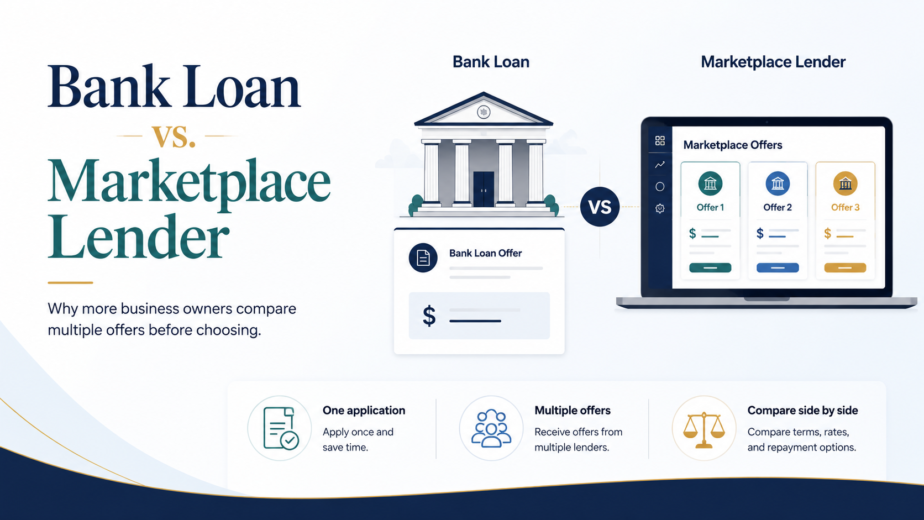
Does every lender weigh these factors the same way? No — different lenders and different financing structures weight credit history, revenue, assets, and other factors differently, which is part of why comparing multiple offers can produce meaningfully different outcomes for the same business.