Every founder who has raised institutional capital eventually faces a version of the same decision: the company needs more runway, and the fastest instinct is to raise another equity round. But that instinct is worth questioning, because venture lending exists precisely to give founders a second option — one that doesn’t require selling more of the company to buy more time.
The fundamental tradeoff
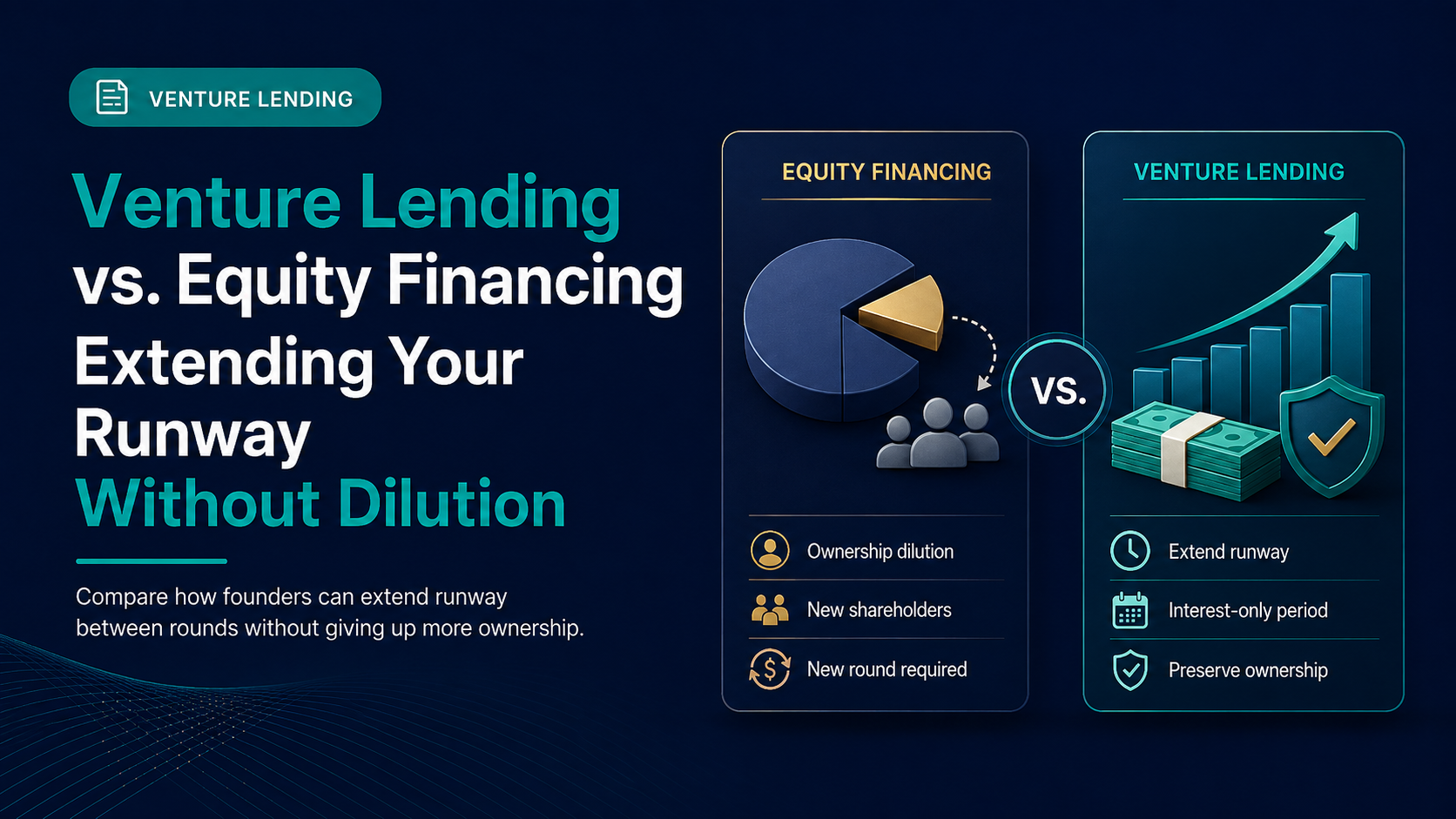
Equity financing means selling ownership. Every share you issue in a new round dilutes existing shareholders, including the founding team. That dilution compounds — a company that raises multiple rounds, each diluting the cap table further, can leave founders with a meaningfully smaller stake by the time of an eventual exit, regardless of how much the company’s overall value grows.
Venture lending is debt, not equity. You receive capital and repay it over time, typically with an interest-only period at the start, but you’re not selling any part of your company to access it. The tradeoff isn’t ownership — it’s a repayment obligation that exists independent of how well or poorly the company ultimately performs.
When venture debt is the smarter move
When you’re close to a milestone that will meaningfully improve your next valuation. If six or twelve more months of runway would let you hit a revenue target, close a strategic partnership, or complete a product launch that materially strengthens your next raise, venture debt can bridge that gap — letting you raise equity later, from a stronger negotiating position, rather than now, from a weaker one.
When the market isn’t ideal for raising equity at that specific moment. Equity markets move in cycles. Raising a round during a down cycle, purely because you’re running low on cash, can mean accepting a valuation that doesn’t reflect your company’s actual trajectory. Venture debt can buy the time to wait for better conditions.
When you want to preserve negotiating leverage for your next round. A company that raises equity only when it needs to, from a position of strength, tends to negotiate better terms than one raising reactively, under time pressure, because the bank account is running low.

When another equity round makes more sense
When the capital need isn’t tied to a near-term, calculable outcome. Venture debt still needs to be repaid — it works best when there’s a reasonably clear path to the revenue or value that will fund that repayment. Long-horizon, high-uncertainty initiatives may be better suited to equity, which doesn’t require repayment on a fixed schedule.
When you specifically want a new investor’s expertise, network, or credibility. Some equity rounds are valuable for more than the capital — a strategic investor can open doors that debt capital simply doesn’t.
When your revenue isn’t yet predictable enough to support debt service. Venture lenders generally want to see contracted or recurring revenue that can reasonably support interest payments, even during the interest-only period. Pre-revenue or highly unpredictable-revenue companies may not yet be a fit for venture debt.
The two aren’t mutually exclusive
In practice, many venture-backed companies use both at different points — equity to fund the business’s core growth and strategic positioning, and venture debt to extend runway between rounds or fund specific initiatives without triggering a new dilution event. Thinking of venture debt as “instead of” equity isn’t quite right; it’s often “in addition to and in between” equity rounds.
What to evaluate in a venture debt term sheet
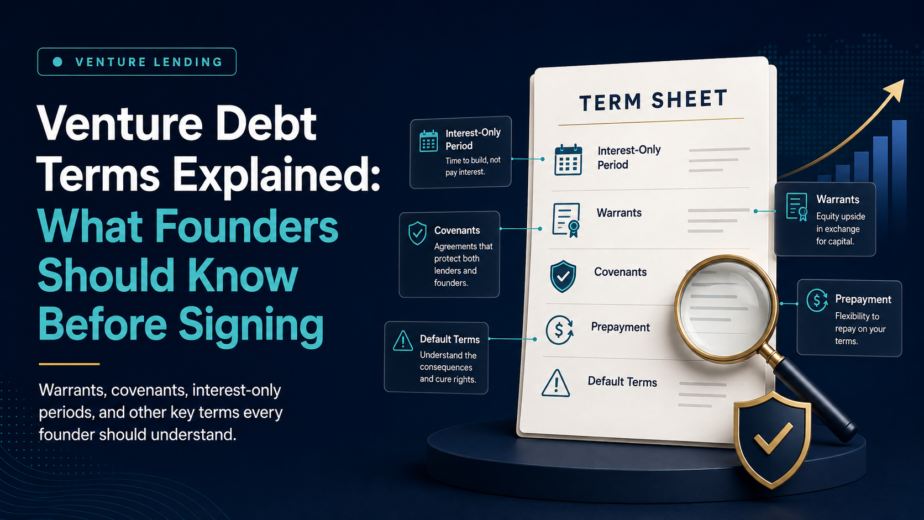
Interest rate and interest-only period length matter, but so do covenants (conditions you agree to maintain, like minimum cash balances or revenue thresholds) and whether the deal includes warrants (the lender’s option to purchase equity later at a set price). Two venture debt offers with similar headline rates can differ significantly once you account for these structural details — which is exactly why comparing more than one offer, rather than accepting the first term sheet, matters as much here as it does with any other type of financing.
FAQ
Do I need to have raised a specific round size to qualify for venture debt? Requirements vary by lender, but venture debt is generally extended to companies with institutional equity backing and demonstrated traction — the specific threshold depends on the lending partner and your company’s revenue profile.
Does venture debt always include warrants? No — warrant coverage varies by lender and deal structure. Some venture debt facilities include warrants, others don’t. This is one of the key terms worth comparing across offers.
What happens if my company doesn’t hit its projected milestones? This depends on the specific covenants in your agreement. It’s important to understand what conditions could trigger a default or accelerated repayment before signing, which is exactly the kind of detail a Yardline specialist can walk through with you on any specific offer.