If your business has a peak season, you already know the uncomfortable truth about it: the cash goes out well before the cash comes in. Inventory has to be bought, produced, or stocked months ahead of the demand it’s meant to serve. Waiting until you feel the cash crunch to start a financing conversation is one of the most common — and most avoidable — timing mistakes seasonal businesses make with asset-based lending.
Why timing matters more than the financing structure itself
Asset-based lending is often a strong fit for seasonal businesses precisely because it scales with your asset base — as inventory or receivables grow ahead of your busy period, the available credit can grow with it. But that only works if the facility is already in place before the buildup starts. Applying for a new facility in the middle of an urgent cash need puts you in a weaker negotiating position and adds real timeline risk, since underwriting, documentation, and approval all take time that a true emergency doesn’t allow for.
Working backward from your peak
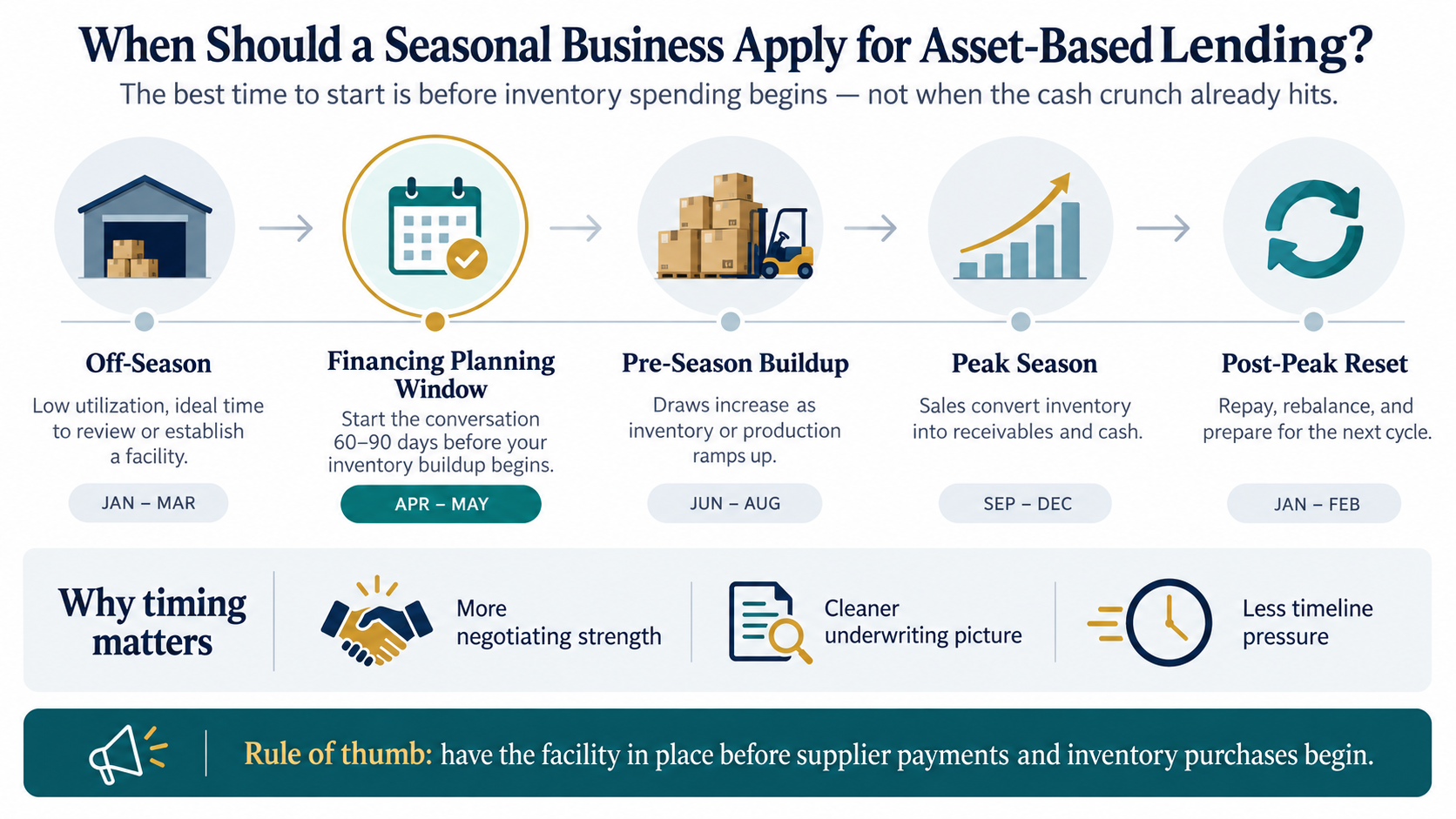
Start with the date your peak season actually begins — not when sales peak, but when the spending to prepare for it has to start. For most seasonal businesses, that’s when purchase orders go out to suppliers, which is often 60 to 120 days before the season itself, depending on production and shipping lead times. A useful rule of thumb: your financing should be in place, not just applied for, before that spending window opens. That usually means starting the conversation with a lender two to three months earlier than that.
What a lender needs to see before your buildup begins
Applying before your busy season, rather than during it, also means your application reflects your business at a calmer, more representative moment — rather than mid-scramble. A lender assessing an asset-based facility wants a clear picture of your current receivables aging, your typical inventory levels in an off-peak month, and your historical pattern of building and drawing down inventory across past seasons. Having a season or two of historical data on hand, rather than projections alone, tends to make for a smoother underwriting conversation.
How the facility should flex across your calendar
- Off-season: Utilization is typically low. This is the ideal window to establish or renew a facility, since your financials reflect a stable, non-urgent picture.
- Pre-season buildup: Draws increase as inventory or production ramps up ahead of demand — this is the period the facility exists to fund.
- Peak season: As sales convert inventory into receivables and then cash, repayment typically accelerates.
- Post-peak: The facility resets, ideally with a stronger asset base than the previous cycle if your business grew year over year.
What happens if you wait too long
Businesses that wait until the cash crunch is already underway to start the conversation often face a narrower set of options — timelines get compressed, and lenders reviewing an urgent request have less room to structure something tailored to the business, compared to reviewing the same business under normal conditions. This isn’t a reason to panic if you’re reading this mid-season and haven’t started yet — it’s a reason to start now for next cycle, and to have an honest conversation with a funding specialist about what’s realistically available for the current one.
A practical planning exercise
Mark your calendar backward from your busiest sales period: when do supplier payments need to go out, when does inventory need to arrive, and when does the buildup in spending actually begin. Then work backward another 60 to 90 days from that point — that’s roughly when a financing conversation should start, not when the cash need becomes urgent.
FAQ
Can I set up a facility during the off-season and just not use it until I need it? Yes — this is exactly how many seasonal businesses use asset-based lending. The facility can sit largely undrawn during slower months and be drawn against as your inventory or receivables build ahead of peak season.
Does my facility need to be resized every year? Many facilities are structured to reassess periodically as your asset base changes, which can mean more available credit each year if your business is growing — worth confirming with your specific lender.
What if my peak season timing shifts from year to year? This is common, and it’s worth discussing directly with a funding specialist — the planning principle (start the conversation well before the spending, not the selling, begins) holds regardless of the exact calendar.