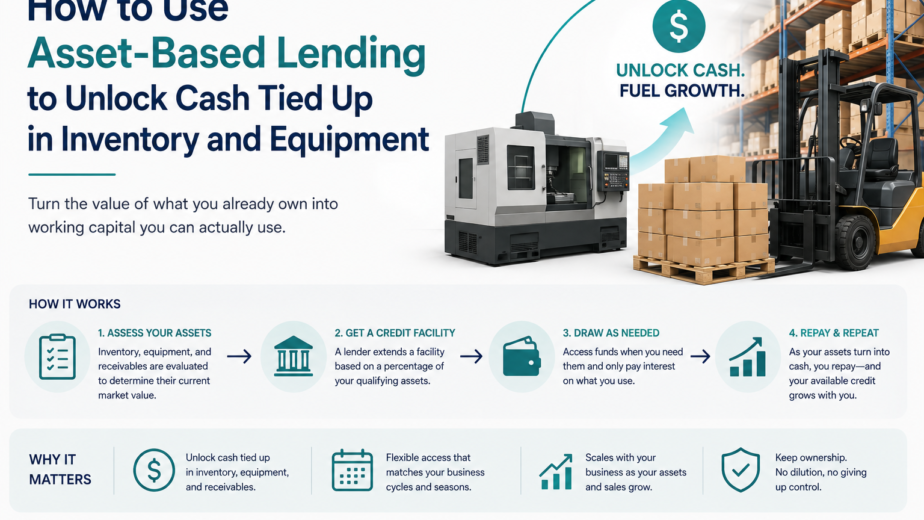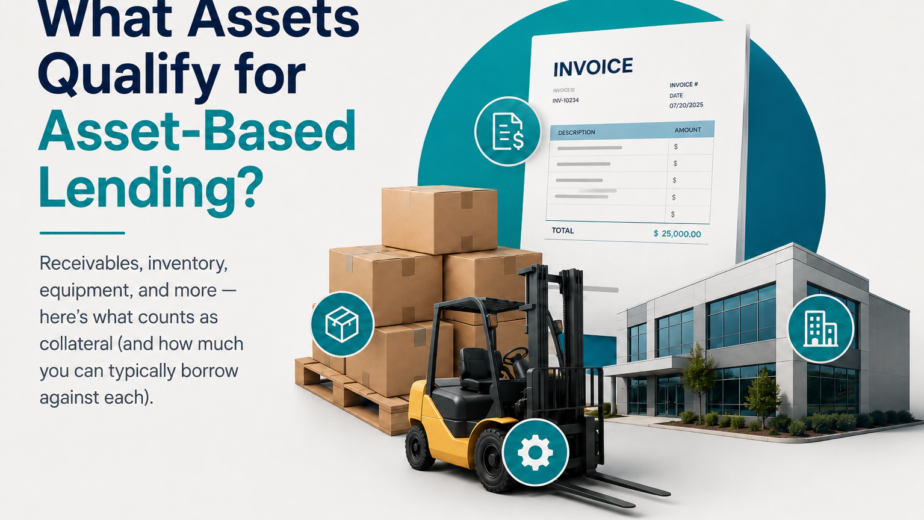
Both asset-based lending and factoring involve using your accounts receivable to access capital, which leads a lot of business owners to assume they’re basically the same thing with different names. They’re not. The structures differ in ownership, control, and how the relationship with your customers works — differences that matter more than the surface-level similarity suggests.
The core structural difference
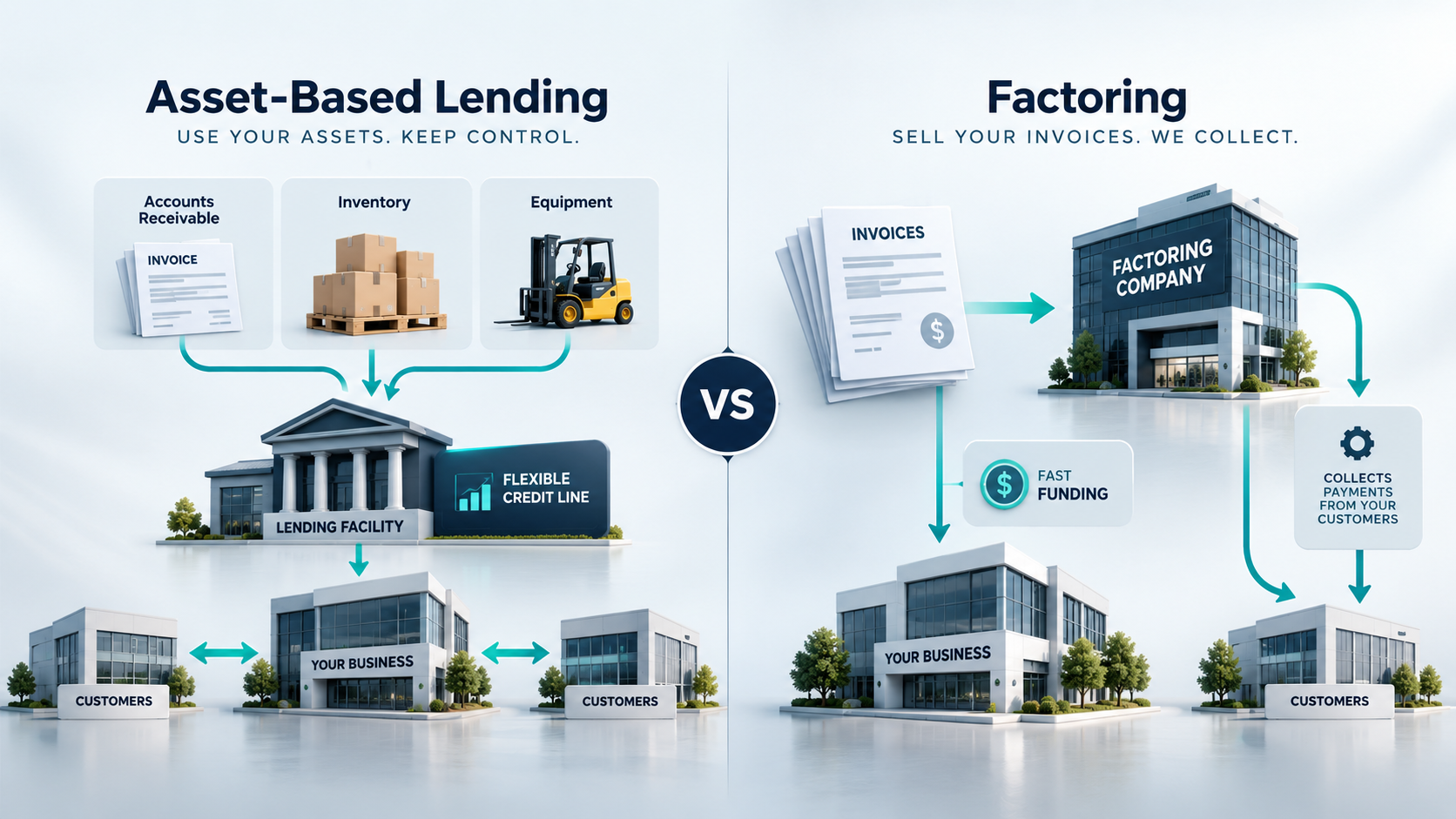
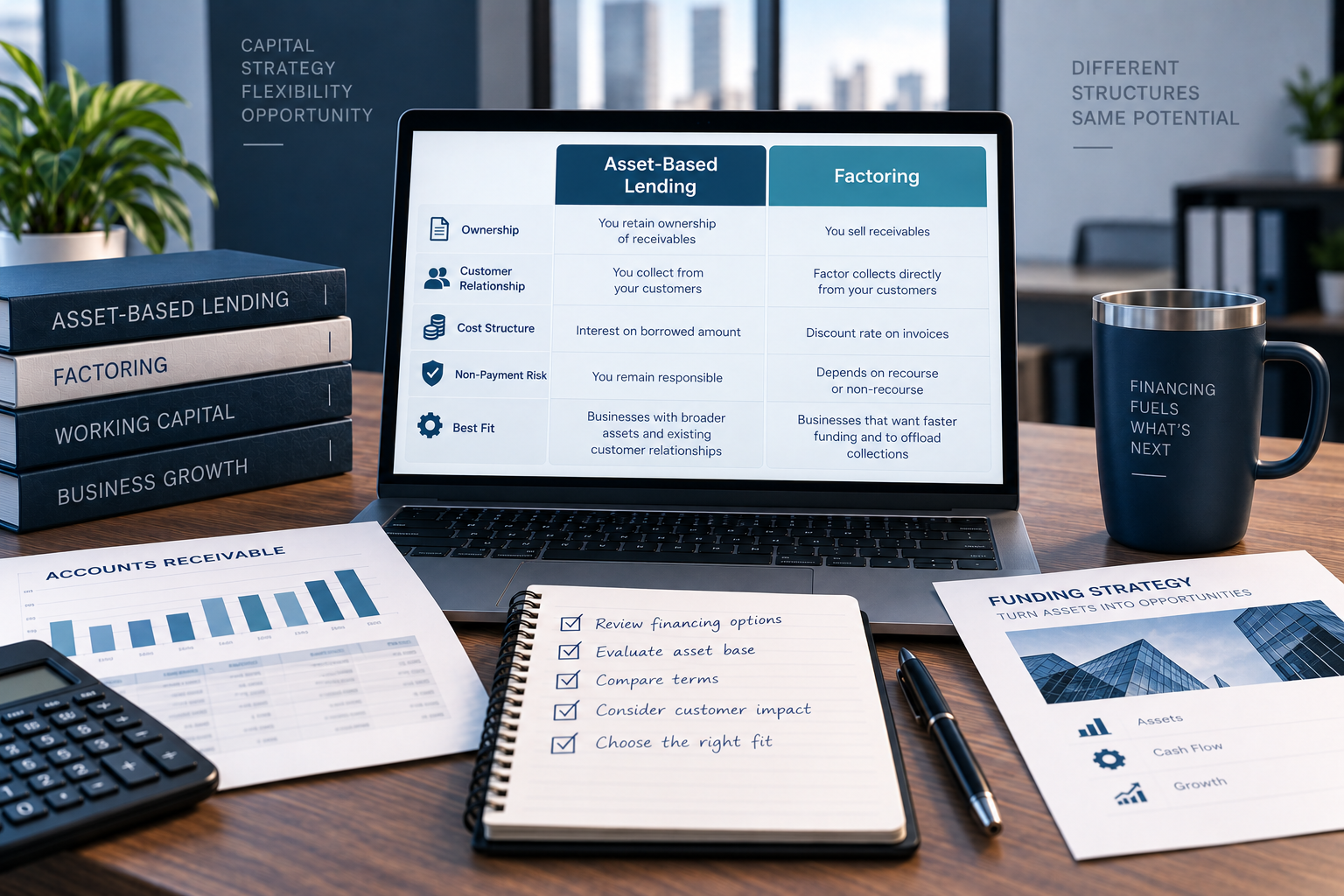
In asset-based lending, your receivables (along with potentially inventory or equipment) serve as collateral for a loan — you retain ownership of the receivables and continue collecting on them yourself, while the lender has a claim against that collateral if the loan isn’t repaid. In factoring, you actually sell your receivables to a factoring company at a discount, and the factoring company takes over collection directly from your customers.
This distinction shapes almost everything else about how the two products work in practice.
Who deals with your customers
With asset-based lending, your customer relationship is unaffected — you continue invoicing and collecting as you always have, and your lender is generally not part of that interaction at all. With factoring, the factoring company typically takes over collections, which means your customers may be dealing directly with a third party rather than with you, and may become aware that their invoice has been sold.
How the cost is structured
Asset-based lending typically involves interest on the amount borrowed against your collateral, structured similarly to other secured lending. Factoring typically involves a discount rate applied to the face value of the invoices sold — you receive less than the full invoice value upfront, with the factoring company’s fee built into that discount, and it not being structured as a traditional interest rate in the same way.
What happens if a customer doesn’t pay
This is one of the more consequential differences. With asset-based lending, your receivables remain your asset and your risk — if a customer doesn’t pay, that’s a bad debt on your books, though your borrowing base may adjust as a result. With factoring, this depends on whether the arrangement is recourse or non-recourse: recourse factoring means you’re still responsible if the customer doesn’t pay, while non-recourse factoring shifts that risk to the factoring company, typically at a higher cost.
Which businesses tend to prefer each structure
Asset-based lending tends to appeal to businesses that:
- Want to maintain direct control over customer relationships and collections
- Have a broader asset base beyond just receivables — inventory, equipment — that they want reflected in their borrowing capacity
- Prefer a more traditional lending relationship structure
Factoring tends to appeal to businesses that:
- Want to offload the collections function entirely, freeing up internal time and resources
- Need capital quickly and are comfortable with customers being aware of the arrangement
- Have concentrated receivables risk they’d prefer to shift to a third party, particularly with non-recourse factoring
A common misconception worth addressing
Some business owners avoid factoring because they assume it signals financial distress to their customers. In many industries, factoring is a mainstream, widely used financing tool, and customer perception varies significantly by industry and by how the arrangement is presented. This is worth evaluating honestly for your specific customer base and industry, rather than assuming a universal negative perception that may not actually apply.
Can you use both?
Some businesses use asset-based lending for their broader asset base while factoring specific receivables — for example, invoices from a single large, slow-paying customer — as a targeted solution for a particular part of their receivables portfolio, rather than treating the two structures as mutually exclusive across the entire business.
FAQ
Is factoring more expensive than asset-based lending? It depends on the specific terms of each — factoring’s discount rate and asset-based lending’s interest rate aren’t directly comparable without converting both into an equivalent cost, which is worth doing explicitly with real numbers rather than assuming either is categorically cheaper.
Will my customers know if I use asset-based lending? Generally no — asset-based lending typically doesn’t change how your customers interact with your business, since you retain the collection relationship.
Can I switch from factoring to asset-based lending later, or vice versa? Yes, though transitioning involves its own process — worth discussing directly with a funding specialist if your needs or preferences change over time.