The businesses that move fastest through an asset-based lending application aren’t necessarily the ones with the strongest financials — they’re often the ones that show up with the clearest, most organized picture of those financials from the start. Preparation doesn’t change what your business is worth to a lender, but it can meaningfully change how quickly and smoothly that value gets recognized.
Start with a current, detailed accounts receivable aging report
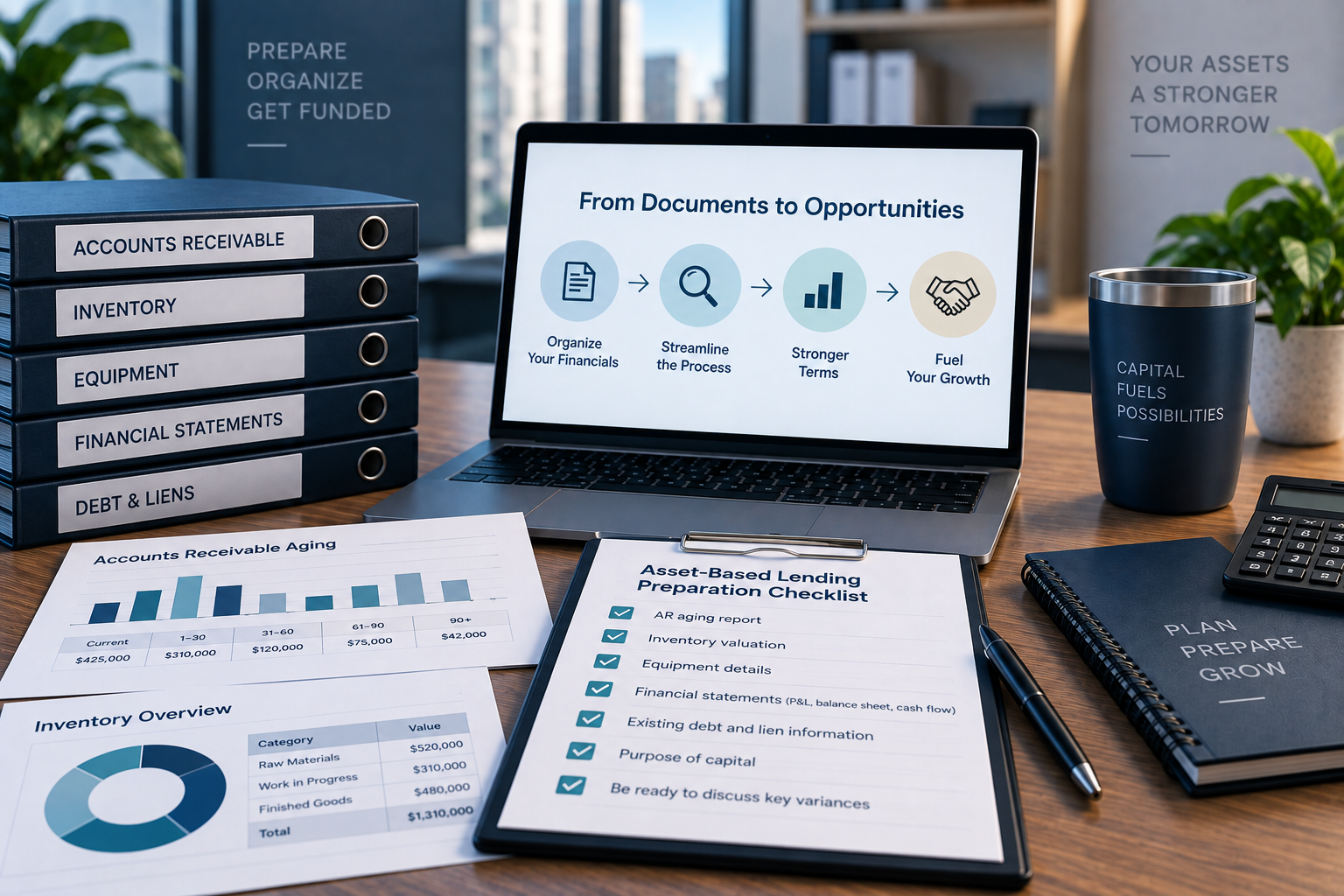
Since receivables are typically the most heavily weighted collateral in an asset-based facility, a clear aging report — showing what’s current, and what’s 30, 60, or 90-plus days past due — is one of the most valuable documents you can bring to the conversation. If your internal records are scattered across invoicing software, accounting systems, and manual spreadsheets, consolidating this into one clear report before applying saves real time later.
Get a realistic, current valuation of your inventory
Book value and realistic market value aren’t always the same thing, particularly for inventory that’s aged, seasonal, or specialized. Rather than relying solely on your accounting system’s book value, take a clear-eyed look at what your inventory would actually be worth if it needed to be sold — this is closer to how a lender will evaluate it, and having this perspective ready helps you understand what to expect from the assessment.
Document your equipment with real specifics
For equipment or machinery you intend to include as collateral, gather documentation beyond just “we own this equipment” — model numbers, purchase dates, condition, and any existing liens or financing already attached to it. A lender assessing equipment value needs specifics to work from, and having this ready in an organized format speeds up what can otherwise be a slow verification process.
Prepare clean, recent financial statements
Profit and loss statements, balance sheets, and cash flow statements from the past 12 to 24 months give a lender the broader context around your asset base — not just what you own, but how your business has been performing. If your financials aren’t already reviewed or organized in a standard format, having your bookkeeper or accountant clean these up before applying can meaningfully smooth the process.

Understand your own numbers before a lender asks about them
Beyond simply having documents ready, be prepared to speak clearly to the story behind them — why receivables aging shifted in a particular quarter, why inventory levels look unusual relative to a typical month, or why a specific period’s financials look different from the surrounding ones. A lender will likely ask about anything that looks unusual, and having a clear, honest explanation ready moves the conversation forward faster than having to research your own numbers on the spot.
Gather your existing debt and lien information
If your business already has other financing in place — a term loan, an existing line of credit, equipment financing — have clear documentation of those obligations and any liens attached to specific assets. A new asset-based lender needs to understand what’s already encumbered before they can assess what’s available as new collateral.
Have a clear, specific answer for what the capital is for
While asset-based lending is generally more flexible in permitted use of funds than some other financing types, being able to articulate clearly what you intend to use the capital for — inventory buildup, expansion, refinancing, working capital — helps a lender size and structure the offer appropriately, rather than working from a vague general request.
Why this preparation pays off beyond just speed
Beyond a faster process, walking into an asset-based lending conversation well-prepared tends to produce a more accurate, favorable assessment of your business overall. A lender working from incomplete or disorganized information may default to more conservative assumptions simply because the fuller picture isn’t clearly available to them — preparation isn’t just about efficiency, it’s about making sure your business gets credit for what it’s actually worth.
FAQ
Do I need audited financial statements to apply for asset-based lending? Not always — requirements vary by lender and facility size, but having clean, well-organized financials, whether audited or not, meaningfully helps the process regardless of the specific requirement.
How far back should my financial documentation go? Twelve to twenty-four months is a common range that gives a lender enough context to understand trends, though specific requirements vary by lender and by your business’s history.
What if my receivables aging report shows a lot of past-due invoices? It’s better for a lender to see this clearly upfront than to discover it during underwriting — a lender can work with a business that has some past-due receivables, but transparency about it tends to produce a more accurate, ultimately more favorable outcome than obscuring it.