
One of the defining features of asset-based lending is that your available credit is meant to move with your asset base — but how often that actually happens, and what triggers a change, isn’t always clearly understood at the outset. Knowing this cadence in advance helps you plan around it, rather than being surprised by either an increase or a decrease in available credit.
Why reassessment happens at all
Because your borrowing base is tied to the value of specific assets — receivables, inventory, equipment — that value genuinely changes as your business operates. A lender needs a mechanism to keep the facility’s available credit aligned with the current, real value of your collateral, rather than the value at the moment the facility was first established, which could be significantly out of date within just a few months for a fast-growing or seasonal business.
Typical reassessment frequency
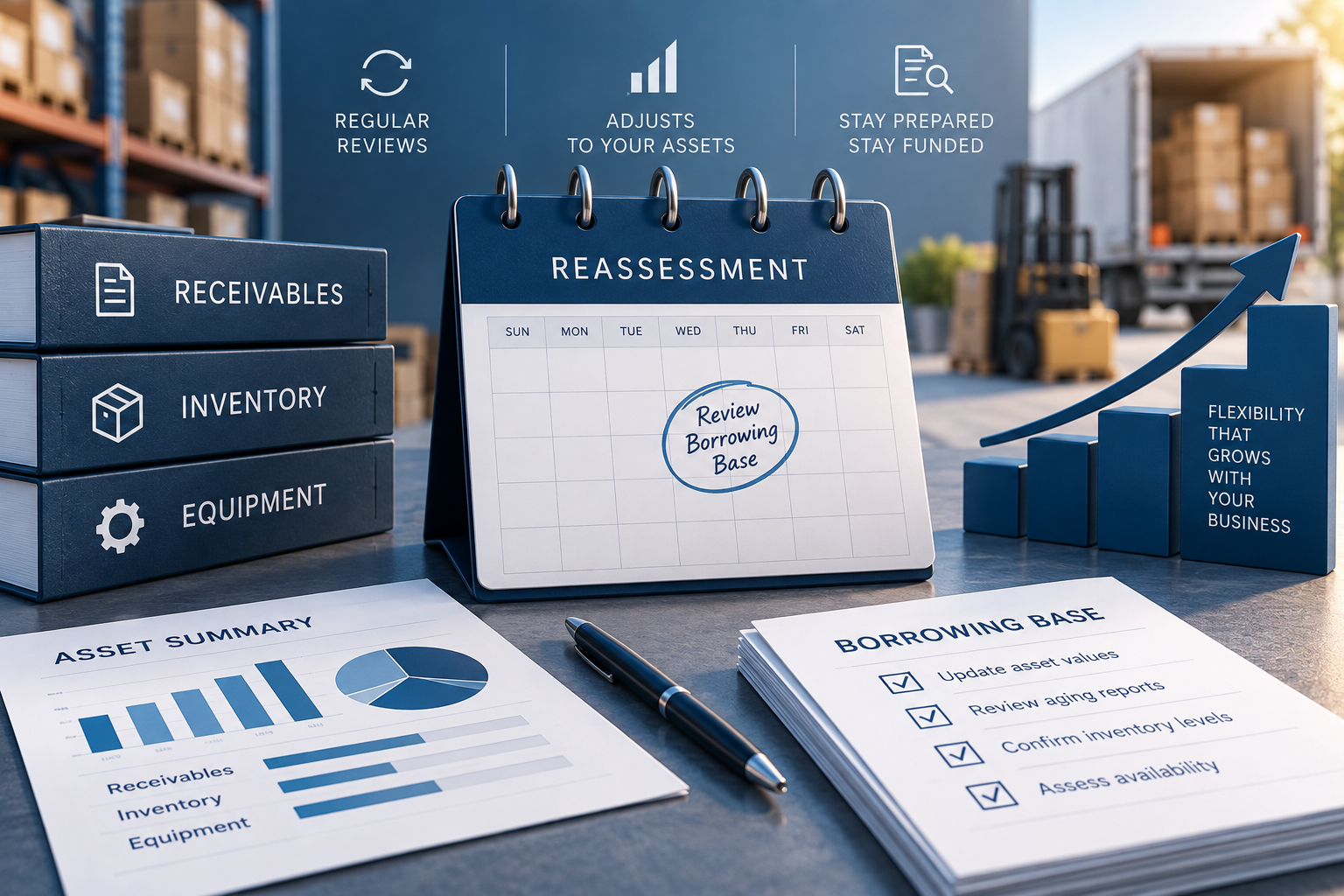
This varies by lender and by the specific facility, but many asset-based facilities are reassessed on a monthly basis for the borrowing base calculation itself — meaning your available credit can shift each month based on updated receivables aging and inventory levels. A broader review of the facility’s overall terms and structure typically happens less frequently, often annually, unless a significant change in your business triggers an earlier review.
What triggers a reassessment beyond the regular schedule
A significant change in your asset composition. A large new contract that substantially increases receivables, a major inventory buildup ahead of a season, or a significant equipment purchase can all trigger a more immediate reassessment rather than waiting for the next scheduled review.
A material change in your business overall. Entering a new market, adding a new product line, or a significant shift in your customer base can prompt a lender to revisit the facility’s structure more broadly, not just the borrowing base calculation.
Your own request. If you believe your asset base has grown meaningfully since the last reassessment, you can generally request a review rather than waiting passively for the next scheduled one — particularly useful if you’re aware of an upcoming capital need tied to that growth.
What reduces your available credit, not just what increases it
Reassessment works in both directions. If your receivables age further past due, if inventory levels drop, or if the overall quality of your asset base declines, your available credit can decrease at the next reassessment — which is worth planning around, particularly heading into a period where you’re relying on a certain level of available credit.
How to prepare for reassessment proactively
Keeping your receivables aging reports and inventory records current and accurate, rather than scrambling to update them only when a reassessment is due, makes each review smoother and reduces the risk of your borrowing base being understated due to outdated or incomplete information on the lender’s end.
What to ask your lender directly
Before finalizing any asset-based facility, ask specifically: how often is the borrowing base recalculated, what information do you need to provide and how frequently, and what specifically would trigger a mid-cycle reassessment outside the regular schedule. Getting clear answers to these questions upfront avoids surprises later and helps you build your own internal reporting rhythm around the lender’s actual requirements.
Why this matters for planning, not just for compliance
Understanding your facility’s reassessment cadence isn’t just about meeting a lender’s requirements — it directly affects how you plan your own cash flow and growth. If you know your borrowing base will be reassessed monthly, you can time major inventory or receivables decisions with an awareness of how they’ll affect your available credit shortly afterward, rather than treating the facility as a fixed, unchanging resource.
FAQ
Can my available credit change significantly between reassessments? Generally, most facilities are structured so major asset-base changes get incorporated at the next regular reassessment, though a significant change might justify requesting an earlier review rather than waiting.
What happens if a reassessment reduces my available credit below what I’ve already drawn? This is worth understanding clearly with your specific lender, since the resolution — a required paydown, a grace period, or another mechanism — varies by agreement.
Does a reassessment always require new documentation from me? Often, yes — updated receivables aging, inventory reports, or similar documentation is typically needed to support the recalculated borrowing base, which is part of why keeping records current matters.