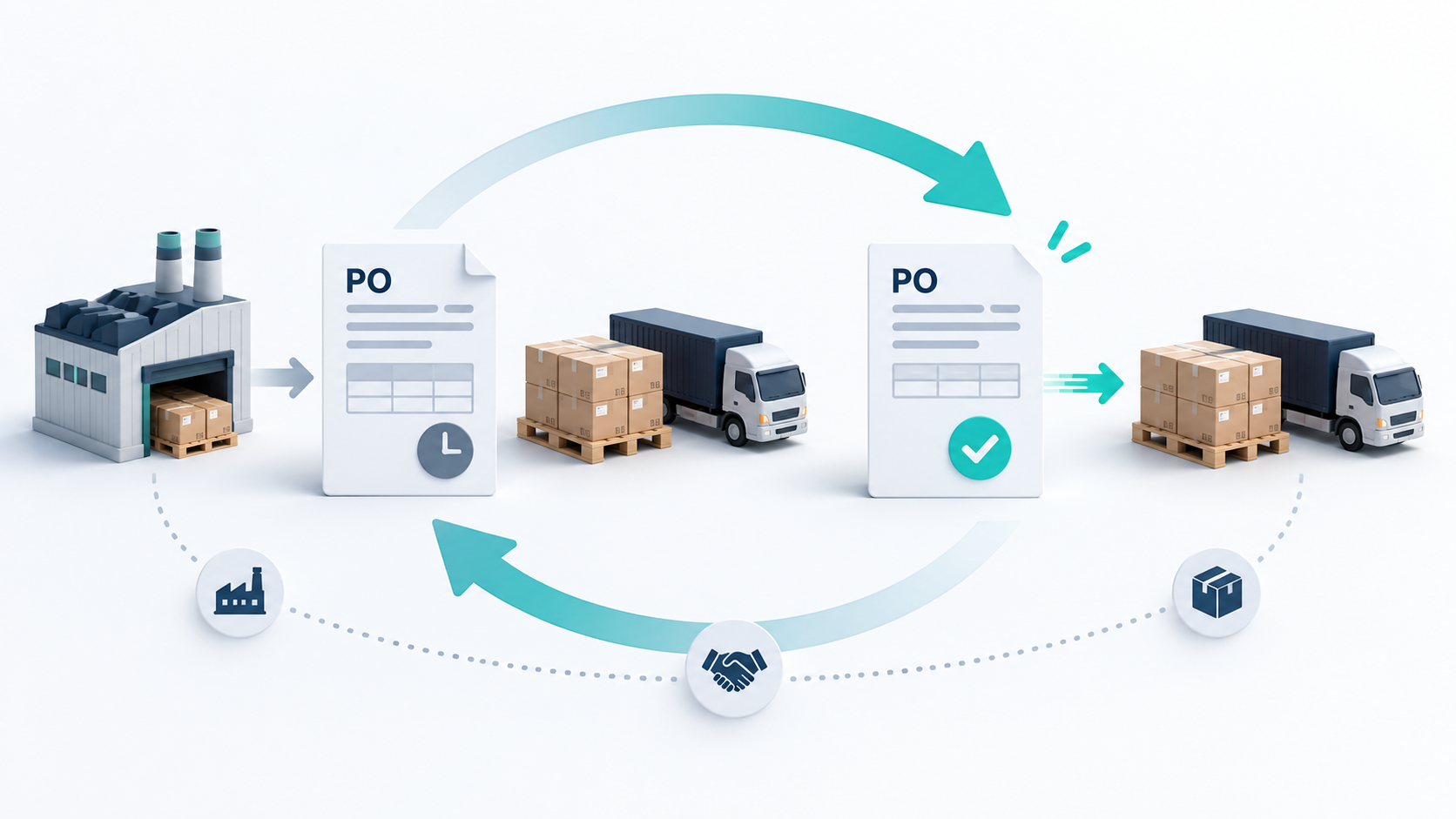
The first time a business uses PO financing, the process can feel like a lot to manage — new documentation, an unfamiliar underwriting conversation, and genuine uncertainty about how smoothly it will go. The good news for businesses with recurring customer relationships is that this process tends to get meaningfully easier with each subsequent order, for reasons worth understanding upfront.
Why the first application is the hardest
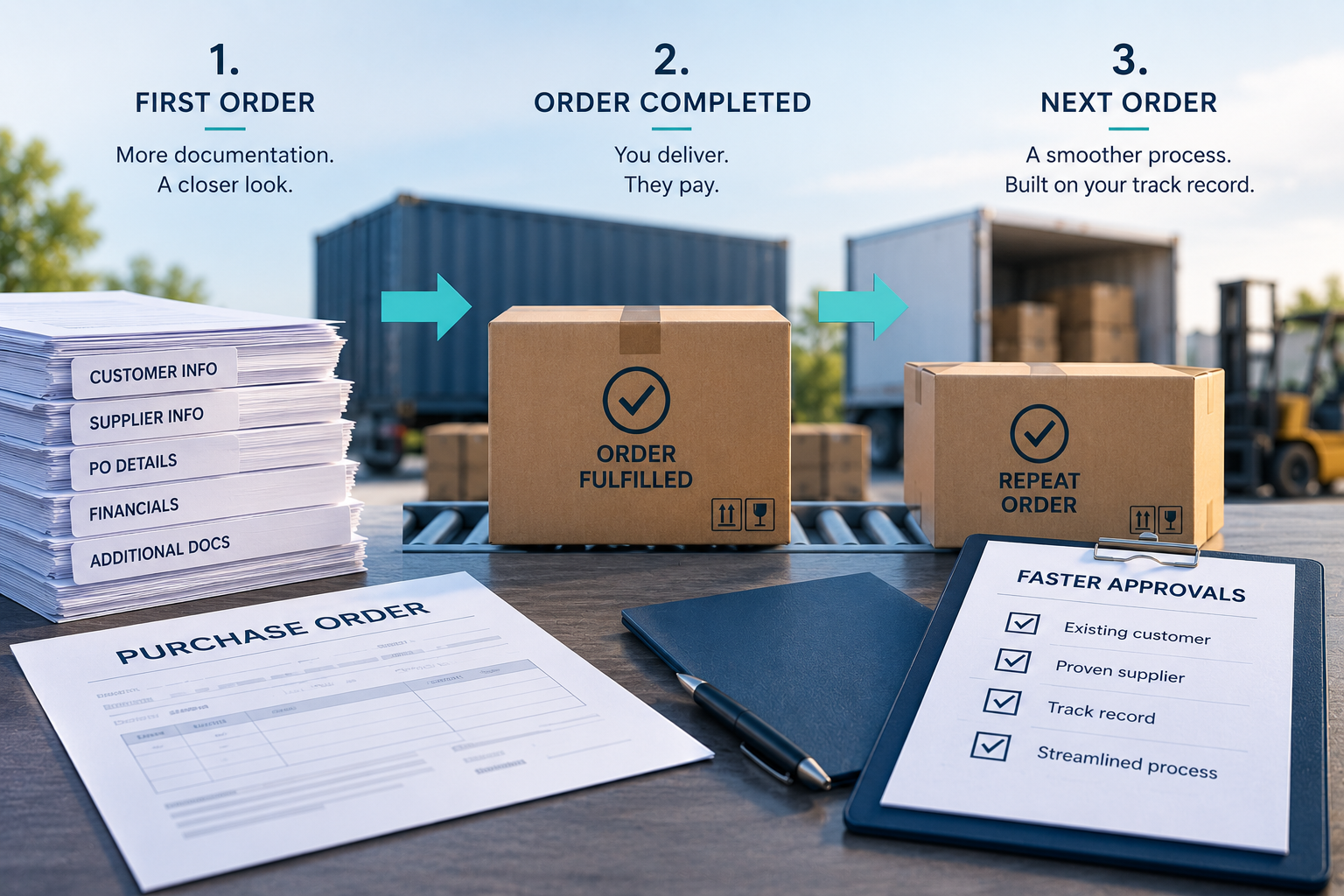
A first-time PO financing application involves a lender evaluating everything from scratch: an unfamiliar customer relationship, an unfamiliar supplier relationship, and no track record of how smoothly your business executes on a financed order from start to finish. Naturally, this leads to a more thorough, sometimes slower review than a lender might apply to a proven relationship.
What changes once you have a track record
The customer relationship is no longer a question mark. If a previous financed order with the same customer was fulfilled and paid on time, that history directly supports the underwriting for the next order with that same customer — the lender isn’t evaluating an unknown relationship, but one with demonstrated performance.
Your supplier relationship has its own track record now, too. A lender gains confidence not just in whether your customer pays, but in whether your supplier reliably delivers on the timeline your business commits to — both of which matter for the transaction to complete successfully.
Your own execution is demonstrated, not just claimed. Successfully managing a financed order from purchase order to fulfillment to repayment is itself a meaningful data point for a lender evaluating your business’s operational reliability.
Does this translate into faster approval and better terms?
Often, yes, though the degree varies by lender. Some lenders formalize this into a streamlined process for repeat transactions with an established customer and supplier pair, reducing the documentation and review time compared to a first-time request. Terms may also improve over time as your track record grows, though this is worth discussing explicitly with your specific lender rather than assuming it happens automatically.
What doesn’t change, even with a strong track record
Each new order is still, fundamentally, its own transaction — a lender will still want to confirm the specific purchase order terms, the current cost structure, and that nothing material has changed about the customer or supplier relationship since the last financed transaction. A strong track record streamlines the process; it doesn’t eliminate the need for a real, if faster, review each time.
Building a deliberately repeatable process
Businesses that use PO financing regularly with the same customers benefit from treating it as a standard, recurring part of their order fulfillment process rather than a one-off financing event each time. Keeping documentation organized and consistent across orders, and maintaining open communication with your lender about upcoming recurring orders, tends to compound the benefits of an established track record over time.
What happens when a new customer or supplier enters the picture
Even with an excellent track record on existing relationships, a genuinely new customer or supplier relationship resets some of this — a lender will evaluate that specific new relationship on its own merits, since your track record with other customers, while a positive general signal about your business, doesn’t fully substitute for direct experience with the new counterparty.
FAQ
How many successful financed orders does it typically take before the process becomes noticeably faster? This varies by lender, but even a single successfully completed transaction with the same customer and supplier can meaningfully support the next application — the improvement tends to be gradual and cumulative rather than triggered at a specific fixed number.
Should I mention my track record explicitly when applying for a repeat order? Yes — proactively referencing your prior successful transactions with the same customer or supplier, rather than assuming the lender will automatically connect the dots, can help streamline the review.
Does a single late payment on a past order hurt future applications? It’s a factor a lender will likely consider, though a single issue in an otherwise strong track record is generally viewed differently than a consistent pattern — worth discussing directly and honestly if this applies to your situation.