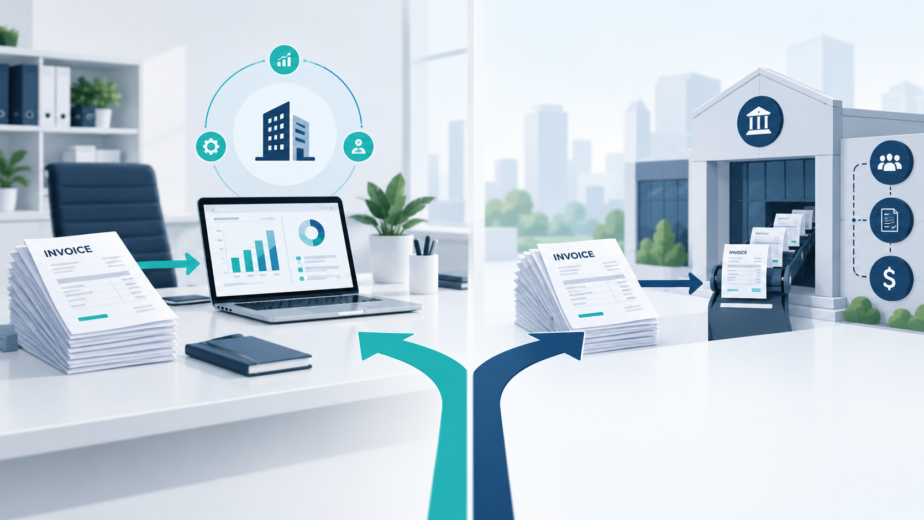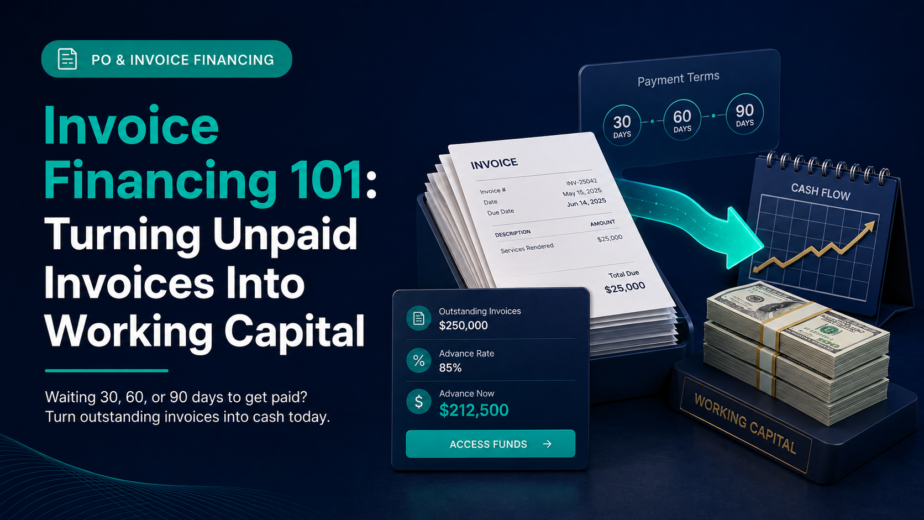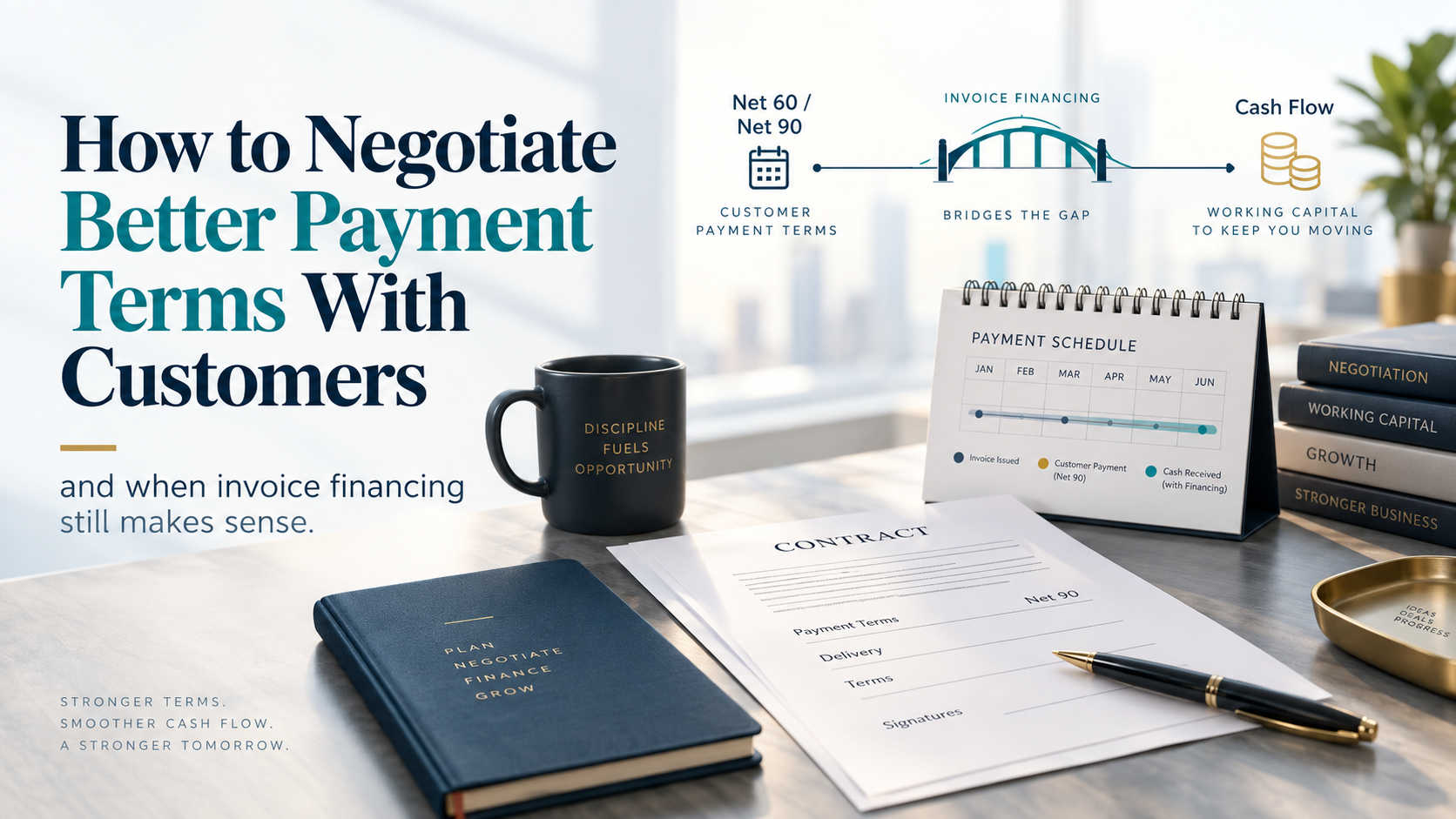
Long payment terms are one of those business realities that everyone dislikes and almost everyone accepts, because pushing back feels riskier than just living with net-60 or net-90. But payment terms are often more negotiable than businesses assume — and even when they’re not, there’s a difference between accepting long terms as a fact of life and having a deliberate strategy for the cash flow gap they create.
Why payment terms are more negotiable than they seem
Payment terms are frequently set by convention rather than genuine necessity — a customer’s standard net-60 policy often exists because it’s their default for all vendors, not because your specific relationship requires it. That means terms are sometimes negotiable, particularly for vendors who bring real value, consistency, or exclusivity to the relationship. The mistake many businesses make isn’t failing to negotiate — it’s never actually asking, on the assumption that the answer will automatically be no.
What actually improves your negotiating position
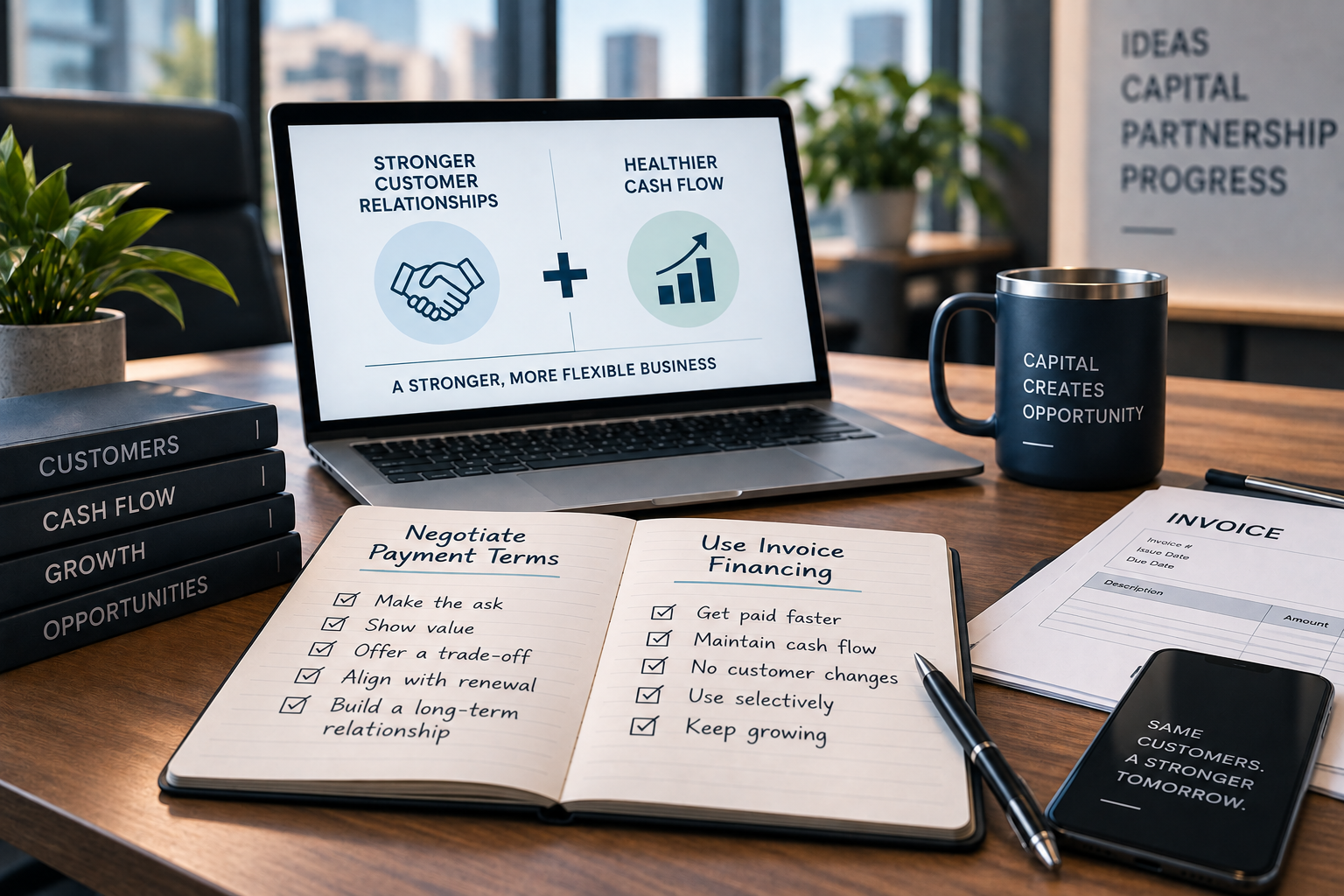
A track record of reliable delivery. Customers are generally more willing to adjust terms for vendors who have consistently delivered on quality and timeline, since that reliability reduces their own risk in the relationship.
Being genuinely difficult to replace. If your product or service has meaningful differentiation, or switching costs for the customer are high, that leverage extends to payment term conversations, not just pricing ones.
Offering something in exchange. Some customers will shorten payment terms in exchange for a small discount, a volume commitment, or another concession — framing it as a trade rather than a request can change how the conversation goes.
Timing the ask around a renewal or a new, larger order. Negotiating terms in the middle of an existing relationship can feel like reopening a settled question. Tying the conversation to a contract renewal or a significant new order gives both sides a natural moment to revisit the terms.
When negotiation genuinely won’t work
Some customers — particularly large retailers or enterprise buyers — have payment terms set by policy across their entire vendor base, with little room for individual negotiation regardless of the relationship or leverage involved. If you’ve made a genuine attempt and the terms simply aren’t moving, that’s not a failure of negotiation — it’s useful information that tells you to plan around the terms rather than against them.
This is where invoice financing fits
When payment terms aren’t going to change, invoice financing addresses the actual problem — the cash flow gap — without requiring the customer relationship to change at all. Rather than treating long payment terms as something to fight indefinitely, invoice financing lets you accept the terms your customer needs while still accessing the cash your business needs, converting an earned but unpaid invoice into usable working capital well before the actual due date.
Using both approaches together
The strongest approach for many businesses isn’t negotiation instead of financing, or financing instead of negotiation — it’s negotiating where there’s realistic room to do so, and using invoice financing to bridge the gap on the accounts where terms genuinely won’t move. This combination often produces a better overall cash flow outcome than betting entirely on one approach.
A practical way to decide, account by account
For each major customer, ask two questions: is there realistic room to negotiate shorter terms given the relationship and leverage involved, and if not, is the payment gap large enough relative to your cash flow to be worth financing? Accounts where the answer to the first question is genuinely no, and the second is yes, are strong candidates for invoice financing specifically — rather than applying the same approach uniformly across every customer relationship.
FAQ
Will asking to negotiate payment terms damage the customer relationship? A reasonable, professionally framed request rarely damages a relationship built on real value — though it’s worth reading the specific dynamic of each relationship before deciding how directly to raise it.
Can I use invoice financing selectively, just for certain customers or invoices? Yes — many businesses use invoice financing on specific accounts with the longest terms or largest balances, rather than financing every invoice they issue.
Does using invoice financing suggest to a customer that my business is struggling? Not inherently — using financing tools to manage cash flow around long payment terms is a common, mainstream practice, particularly in industries where extended terms are standard.