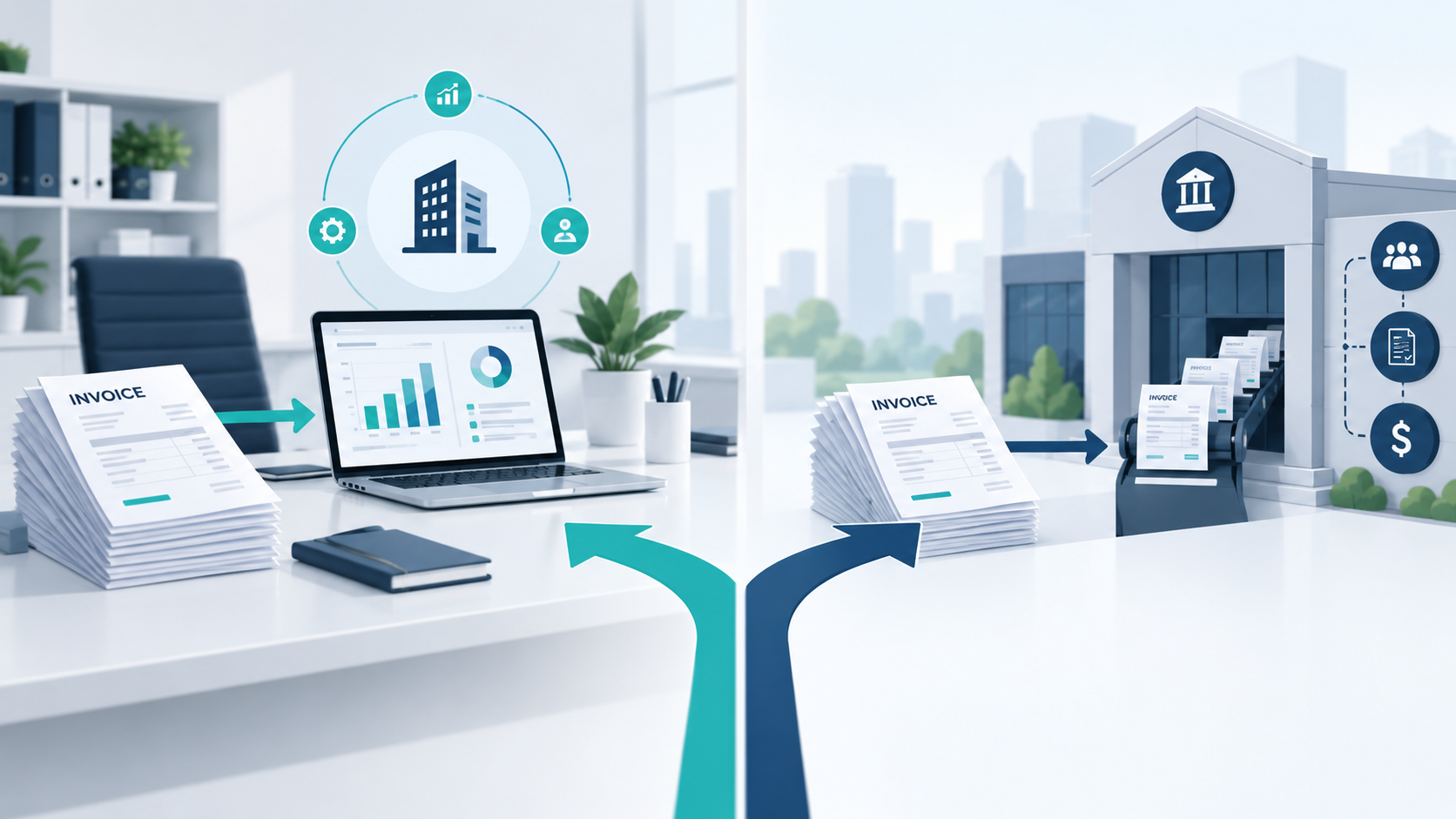
Factoring and invoice financing solve the same basic problem — converting an unpaid invoice into usable cash — which is exactly why the two terms get used almost interchangeably, even though the underlying structures work differently in ways that matter for your business.
What actually distinguishes the two
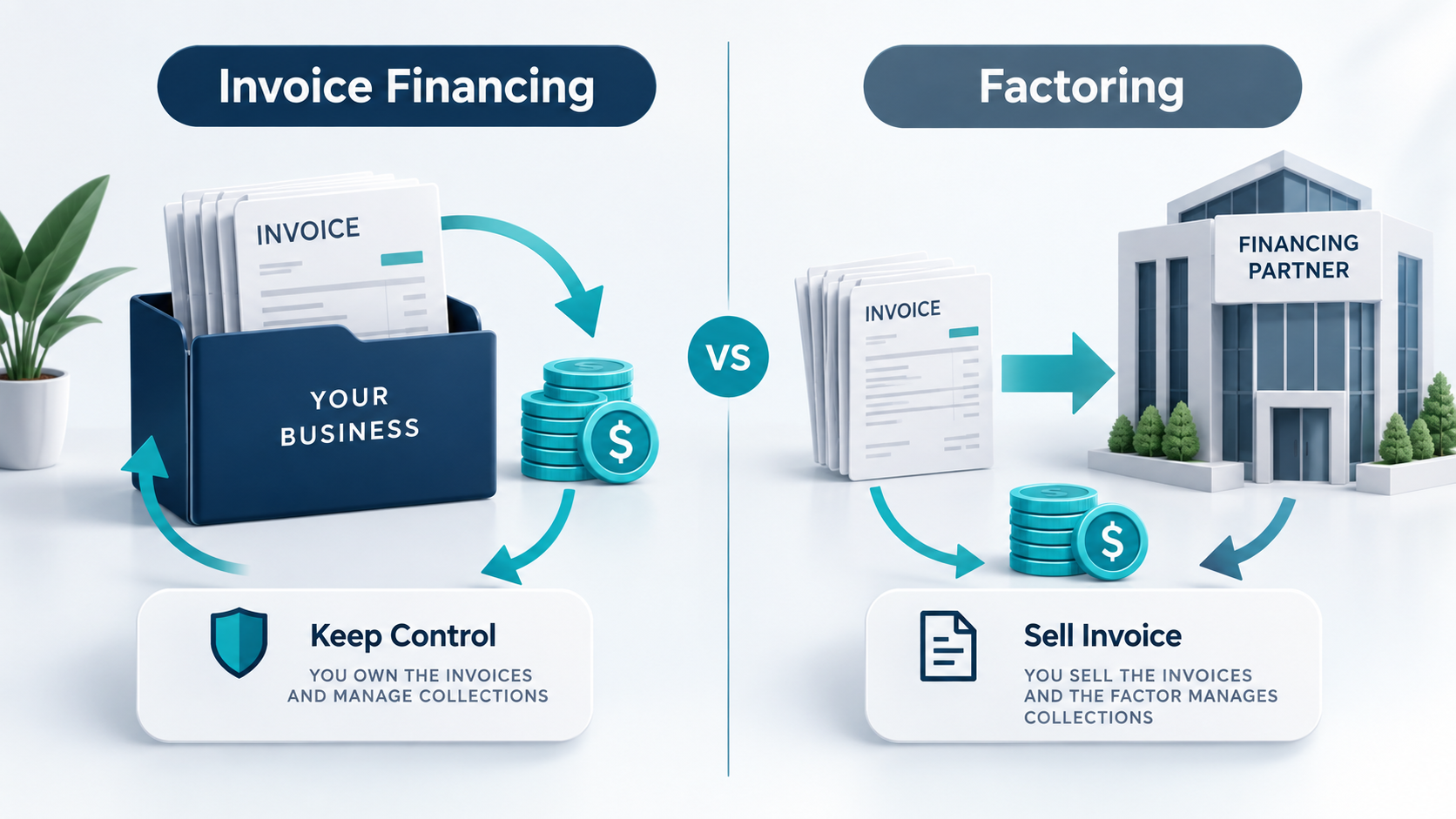
With invoice financing, you typically retain ownership of your invoices and use them as collateral to access an advance, continuing to manage collections yourself. With factoring, you sell the invoice outright to a third party, who then takes over collection from your customer directly. The difference is fundamentally about who owns the invoice and who deals with your customer to collect on it.
Why this distinction affects your day-to-day operations
If maintaining direct control over customer communication matters to your business — for relationship reasons, brand consistency, or simply preference — invoice financing keeps that relationship entirely in your hands. Factoring introduces a third party into a process your customers may not be used to, which is a bigger operational and relational shift for some businesses than others, depending on the nature of the customer relationships involved.
Comparing the cost structures honestly
Invoice financing costs are typically structured as fees or interest on the advanced amount. Factoring costs are typically structured as a discount on the invoice’s face value. These aren’t directly comparable without converting both into an equivalent annualized cost based on your typical invoice timeline — a calculation worth doing explicitly with real numbers from any specific offers you’re comparing, rather than assuming one structure is inherently cheaper than the other.
Speed and accessibility differences
Factoring arrangements sometimes move faster to set up, particularly for businesses with straightforward receivables and less established banking relationships, since the underwriting focus is heavily on the creditworthiness of your customers rather than your own business history. Invoice financing may involve a somewhat more detailed look at your own business alongside your receivables, depending on the specific lender and structure.
Who tends to prefer factoring
Businesses that want collections handled entirely by a third party, that have significant receivables concentrated in a smaller number of large, creditworthy customers, or that are comfortable with customers being aware of the arrangement tend to gravitate toward factoring — particularly when non-recourse factoring is available to shift bad debt risk away from the business entirely.
Who tends to prefer invoice financing
Businesses that want to preserve full control over customer relationships, that have a broader base of smaller receivables where selling each individually would be less efficient, or that simply prefer a more traditional lending relationship structure tend to lean toward invoice financing.
A practical decision framework
Ask yourself three questions: How important is it that I retain direct control over collections and customer communication? How exposed am I willing to be to bad debt risk if a customer doesn’t pay? And how concentrated are my receivables among a small number of large customers versus spread across many smaller ones? Your answers to these three questions point more reliably toward the right structure than the labels “factoring” or “invoice financing” alone.
It doesn’t have to be a permanent choice
Businesses sometimes start with one structure and shift to the other as their needs change — a business that initially values the hands-off nature of factoring might later prefer the control of invoice financing once it has built out its own collections capability, or vice versa. Treating the initial choice as a starting point rather than a permanent commitment can reduce the pressure of getting it exactly right on the first try.
FAQ
Is one structure generally considered more professional or preferable than the other? No — both are legitimate, widely used financing tools, and the right choice depends on your business’s specific priorities around control, risk, and customer relationships rather than one being inherently superior.
Can I use factoring for some customers and invoice financing for others? Some businesses do structure things this way, particularly using factoring for a specific concentrated risk (like one very large, slow-paying customer) while using invoice financing more broadly — worth discussing directly with a funding specialist if this fits your situation.
Does my industry typically favor one structure over the other? Certain industries have stronger conventions — factoring is particularly common in trucking and staffing, for example — but this isn’t a strict rule, and it’s worth evaluating your specific business rather than defaulting purely to industry convention.